
If you are planning to bring a reptile into Florida or already have one, it is indeed significant to know that permit requirements vary depending on the species and purpose of possession.
For many non-native and higher-risk reptiles, as well as most Class I-III wildlife uses, a permit is required. However, some common pet reptiles may be exempt from special permits. It is important to note that there are conditional and prohibited lists in place, along wiht strict biosecurity rules that limit what can legally be imported, sold or kept.
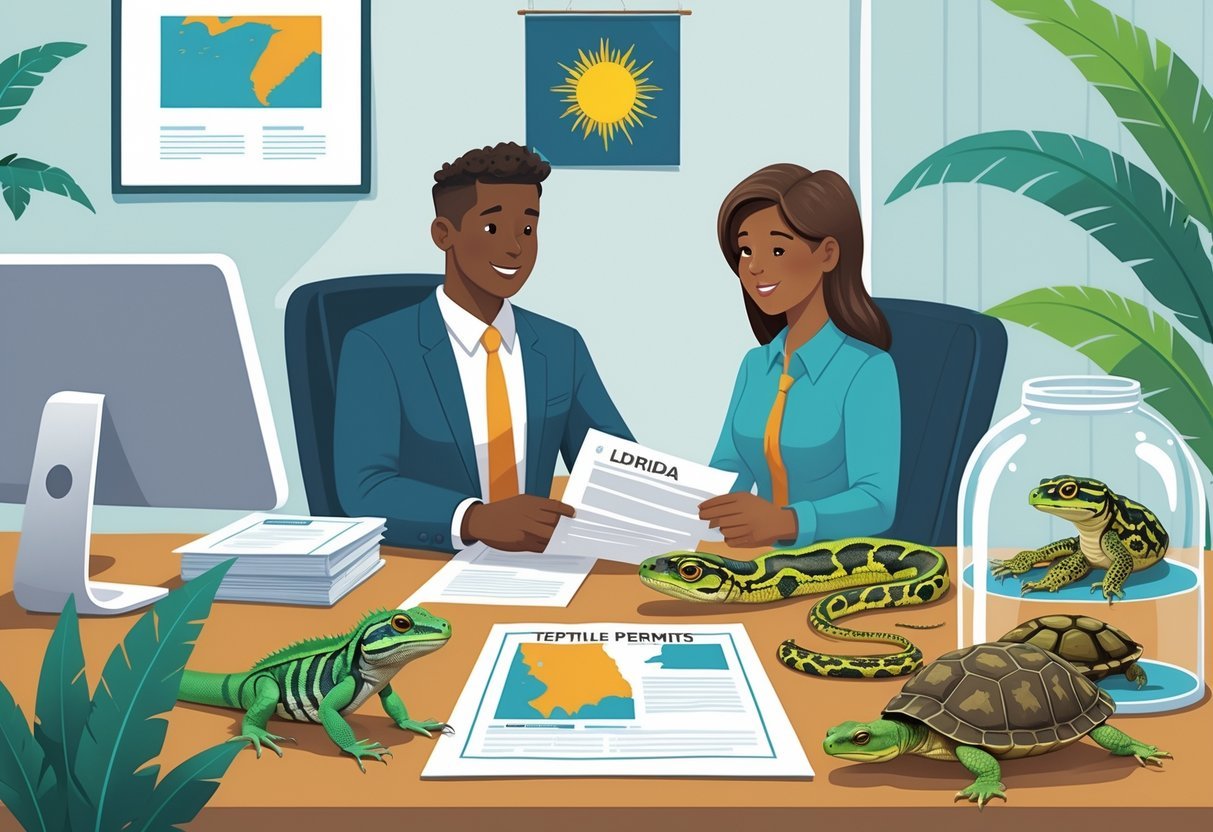
it is crucial to keep in mind that the Florida Fish and Wildlife Conservation Commission (FWC) controls these permits and enforces species-specific rules, import conditions, tagging standards and housing requirements.
The Regulatory Authority for Reptile Permits in florida
The primary authority for issuing permits for reptile possession comes from state regulators; however local regulations as well as federal laws may also impact ownership, breeding, transportation or display of these animals.
It is important to know which agency issues licenses as well as when local ordinances add additional restrictions or when federal standards may apply.
The Role of the Florida fish and Wildlife Conservation Commission
The Florida Fish and Wildlife Conservation Commission (FWC) is responsible for issuing the majority of reptile permits and licenses required for possession, sale, exhibition or transport of regulated species.
The FWC’s Captive Wildlife Office classifies reptiles into categories such as venomous, reptiles of concern and conditional species. They also set permitting requirements,facility standards and experience/training criteria that must be met.
special permits must be obtained from the FWC in order to keep venomous reptiles or species listed as “reptiles of concern”.
In addition to issuing permits, the FWC also enforces recordkeeping, transport and housing rules. They have the authority to inspect facilities, suspend or revoke licenses and impose penalties under Florida Statutes §379.372.
considerations for Local Ordinances
Cities and counties may have stricter regulations than those set by the state. It is indeed critically important to check local animal control laws as well as municipal codes before acquiring a reptile.
Some municipalities in Florida have outright bans on certain species while others may limit numbers or require additional local permits or inspections along with those required by the FWC.
If you plan on keeping a reptile in rental housing,a condominium or any property subject to HOA rules,it is important to confirm any private regulations that may prohibit ownership even if you hold state permits.
Transportation regulations may also differ at a local level along with leash laws and public exhibition standards which can vary from those set by the FWC.
Federal Laws & Agencies Relevant To Reptile Ownership
Federal laws typically do not govern routine pet ownership; however there are specific contexts where they may come into play.These include:
The United States Animal Welfare Act (AWA) which applies to businesses that sell, exhibit or transport animals in interstate commerce. if your activities meet the AWA’s definitions, you may need USDA licensing and inspections.
If you are importing or exporting reptiles,you must comply with U.S. Fish and Wildlife Service (USFWS) rules as well as CITES regulations for listed species.
Disease-control rules from the USDA or CDC can also impact transportation and quarantine for certain species. It is important to check federal requirements in addition to those set by the FWC before moving reptiles across state or international borders.
Reptiles That require a Permit
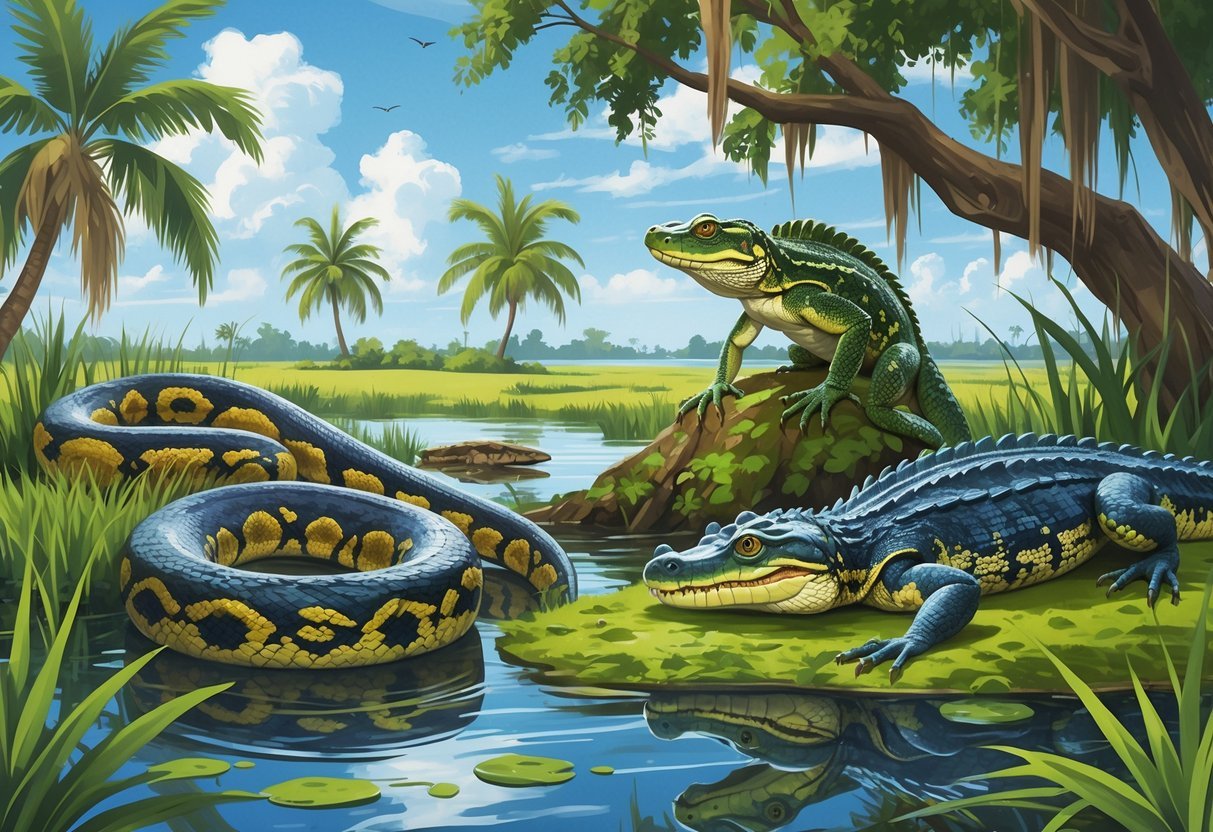
Florida requires permits for several specific groups of reptiles:
- Venomous reptiles & Reptiles of Concern
- Conditional & Prohibited Reptiles
- Class II & Class III Reptiles
Venomous Reptiles & Reptile of Concern
If you plan on keeping venomous snakes or other venomous reptile species, a formal permit is required along with higher levels of scrutiny.
The state requires documented handling experience, secure enclosures that are escape-proof, an approved antivenin and an emergency response plan.
You must also meet inspection standards and may be required to demonstrate safe handling skills to the FWC or an authorized reviewer.
“Reptiles of concern” are species that pose public safety or ecological risks, even if they are not classified as strictly venomous.These species may also require the same paperwork and restrictions as venomous reptiles, including limitations on transport and public exhibition. Strict recordkeeping is also required along with possible conditional restrictions on breeding or sale.
Conditional & prohibited Reptiles
Florida designates certain non-native reptile species as “conditional” or “prohibited” based on their potential to become invasive.
Prohibited reptiles cannot be imported, possessed, sold or released; special exemptions may be granted for research, rehabilitation or permitted facilities.
Conditional reptiles might potentially be allowed under narrow permits that set specific requirements such as containment standards and non-release clauses. If you already possess a conditional species, it is important to follow the permit conditions precisely which may include tagging, reporting transfers and meeting facility specifications. Violating these rules can result in confiscation of the animal(s), fines or criminal charges.
Class II & Class III Reptiles
The captive wildlife permit system in Florida uses classes to define allowable species and activities:
- Class II covers medium-risk native wildlife such as raccoons or smaller carnivores; for reptiles this class may apply to specific non-venomous species with management requirements for public contact, transport or rehabilitation.
- You must apply for a Class II permit and show appropriate caging/husbandry while renewing the permit when required.
- Class III is the highest level of captive wildlife permits which covers high-risk animals including large predators, crocodilians and many venomous reptile species.
- If you hold a Class III permit you can legally possess these animals and exhibit them, but you must comply with rigorous facility standards, liability insurance and reporting.
- The permit process evaluates your experience, emergency plans and intended use (research, exhibition or private possession) before approval is granted.
Reptiles That Do Not Require a Permit
You can legally keep many common non-venomous reptiles in Florida without obtaining a captive wildlife permit. However notably there are still restrictions in place for certain species. The following list clarifies which groups are exempt from permitting requirements:
Species exempt From Permitting
Florida dose not require permits for non-venomous and unprotected reptiles and amphibians. This category includes most small to medium-sized pet snakes, lizards and turtles that are not listed as protected, invasive or of special concern under state law.
Examples include corn snakes, king snakes, bearded dragons, leopard geckos and typical pond turtles – provided they are not protected native species or part of a regulated group.
It is important to note that while these species may be exempt from permits at the state level,there may still be separate rules for transport/sale as well as local ordinances that add additional restrictions. It is indeed always best to confirm city/county codes before acquiring an animal.
Popular Pet Reptiles in Florida
The following reptile species are commonly sold/adopted in Florida without requiring a state permit: corn snakes, ball pythons (non-venomous), beReptile Ownership in Florida: Understanding Regulations and Permits
Florida is known for it’s diverse wildlife, including a wide variety of reptiles. Though, not all reptiles can be kept as pets in the state. In fact,there are strict regulations and permits that must be obtained before owning certain species of reptiles. this article will provide an overview of these regulations and permits, and also important data for potential owners.Before purchasing a reptile in Florida,it is crucial to research the specific care requirements for that species. This includes factors such as enclosure size, temperature gradient, humidity levels, UVB needs, and diet. It is also important to ensure that the species or morph you plan to buy is not listed as restricted or prohibited by the state.
Restricted Species and High-Risk Reptiles
Florida has designated certain reptile species as high-risk due to their potential impact on native ecosystems and human safety concerns. These animals are subject to strict rules regarding possession, marking requirements, and permitted uses.
Examples of prohibited species include large constrictors such as Burmese pythons (Python molurus bivittatus), reticulated pythons (Python reticulatus), green anacondas (Eunectes murinus), Nile monitors (Varanus niloticus), green iguanas (Iguana iguana), and tegus (Salvator spp.).These animals can only be possessed with a specific permit for research purposes or public educational exhibition.
Conditional Species
Some reptile species may be owned under conditional permits with strict guidelines for possession and transfer. For example, qualifying exhibitors may receive limited exceptions for green iguanas or tegus if they meet specific eligibility criteria.
Permit Types and Application Process
The type of permit required depends on how you intend to use or transport the reptile in question. Personal pet ownership requires a Class III permit or a Conditional/Prohibited Species Permit (CSP). Exhibiting or selling reptiles to the public requires a Class III “Exhibition or Public Sale” license or a CSP. Temporary transport of regulated species may also require an importation permit.
Special Compliance, Recordkeeping, and Biosecurity
Reptile owners in Florida must comply with strict regulations regarding recordkeeping, reporting, and biosecurity measures. This includes reporting any escapes, unintentional releases, or bites to the Florida Fish and Wildlife Conservation Commission (FWC) immediately by phone and following up in writing within the specified timeframe. Failure to comply with these requirements can result in fines, permit suspension, or seizure of animals.
Grandfathering Provisions for Previously Owned Reptiles
If you owned a reptile before it became prohibited by the state of Florida,you may qualify for a Prohibited Species for Personal Use Permit. Though, this requires proof of continuous lawful possession from before the listing date.
Biosecurity Measures and Facility Inspections
To minimize escape and disease risks associated with owning reptiles in Florida,owners must implement specific biosecurity protocols such as secure caging with barriers anchored 6 inches below ground. Facilities may also be subject to inspections by FWC officials.
Owning a reptile in Florida comes with many responsibilities and regulations that must be followed. It is important to thoroughly research care requirements for your chosen species and also obtain any necessary permits before bringing home your new pet. By understanding these regulations and taking proper precautions for your animal’s health and safety,you can enjoy owning a unique pet while also protecting native ecosystems.
Ensuring Compliance with Florida’s Captive-Wildlife Regulations
Florida has strict regulations in place for the possession, display, and transport of captive wildlife. These rules are in place to protect both the animals and the public. As a responsible owner of captive reptiles, it is indeed critically important to understand and comply with these regulations to avoid penalties and legal consequences.
Traceability and Record-Keeping
In order to ensure traceability of captive wildlife, markers such as PIT tags and visible enclosure labels must be used. It is indeed also critically important to keep accurate records of all animals in your possession, including their origin, health status, and any transfers or sales.
To prepare for inspections by the Florida Fish and Wildlife Conservation Commission (FWC), it is indeed crucial to keep enclosures clean, maintain fencing and locks, and have current records easily accessible.
Inspections by FWC
The FWC conducts regular inspections of permitted facilities to ensure compliance with captive-wildlife regulations.During these inspections, they look for evidence of proper enclosure construction, escape prevention measures, biosecurity compliance, as well as any other documented deficiencies.
If any violations are found during an inspection or through other means such as complaints or reports from the public, it is important to address them promptly. Failure to do so can result in permit revocation.
Tiered Violation System
In Florida’s tiered violation system for captive-wildlife offenses,
most reptile-related violations fall under Level Two or Level Three categories.
Level Two violations typically include unlawful possession or display of venomous reptiles or species that are considered conditional or prohibited without proper permits.
For first-time Level Two offenses without recent prior convictions,
the penalty is usually a second-degree misdemeanor with fines and possible jail time. Though, repeat offenses can result in a first-degree misdemeanor charge with mandatory minimum fines and potential license suspensions for 1-3 years.
level Three violations are reserved for more serious offenses such as releases or escapes of non-native venomous reptiles. A first-time Level Three offence is considered a first-degree misdemeanor, but repeat offenses can carry even harsher penalties including permanent revocation of captive-wildlife licenses.
In cases where conditional or prohibited species are involved,
immediate mandatory fines and orders to surrender animals may be issued.
Enforcement, Penalties, and Legal Consequences
The FWC has the authority to enforce captive-wildlife regulations through inspections, fines, license suspensions,
and even confiscation of animals if necessary.
Depending on the severity of the offense and any prior convictions,
individuals may face specific criminal classifications,
mandatory fines, and license consequences.
In addition to these penalties,
individuals may also be held liable for capture,transport,boarding,
and veterinary costs associated with confiscated animals.
Failure to pay these costs or conviction for related offenses can result in permit denial or revocation
, making it challenging to obtain future permits.
navigating Other Reptile Regulations
In addition to captive-wildlife regulations,


As someone interested in keeping reptiles as pets, this guide is incredibly helpful for navigating the permit process in Florida. Thanks for putting this together!