
The presence of large black-and-white lizards in Florida has raised concerns about the impact they may have on the state’s wildlife. The answer is clear: Argentine tegus, a species of lizard, have established breeding populations in parts of Florida and pose a threat too native species by preying on ground-nesting animals and competing for resources.
It is crucial to pay attention to this issue because Argentine tegus can grow up to five feet in length,reproduce quickly after brumation (a period of dormancy),and are already causing harm to habitats across several counties.
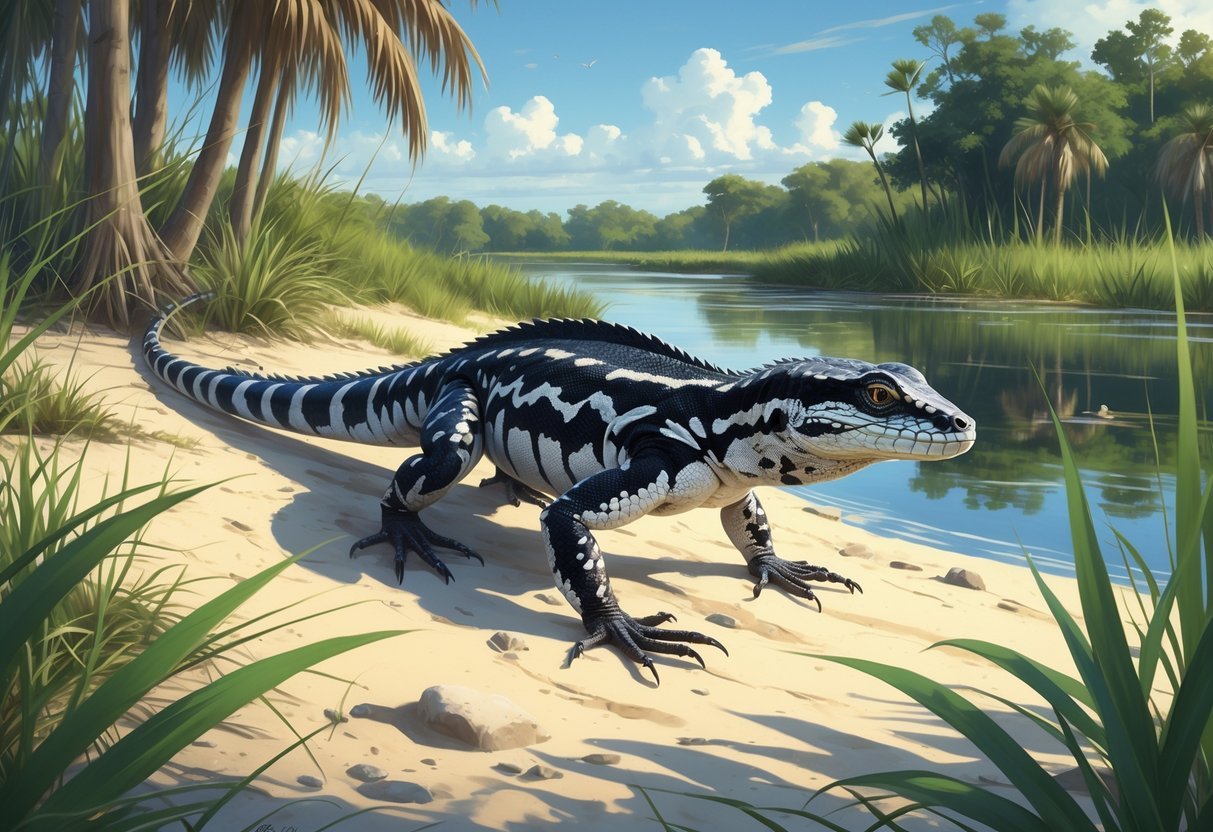
This article will provide an overview of what Argentine tegus are, how they became established through the pet trade, the ecological harm they cause, how to identify and report them, and what can be done to manage their spread through responsible pet practices.
Understanding Argentine Tegus
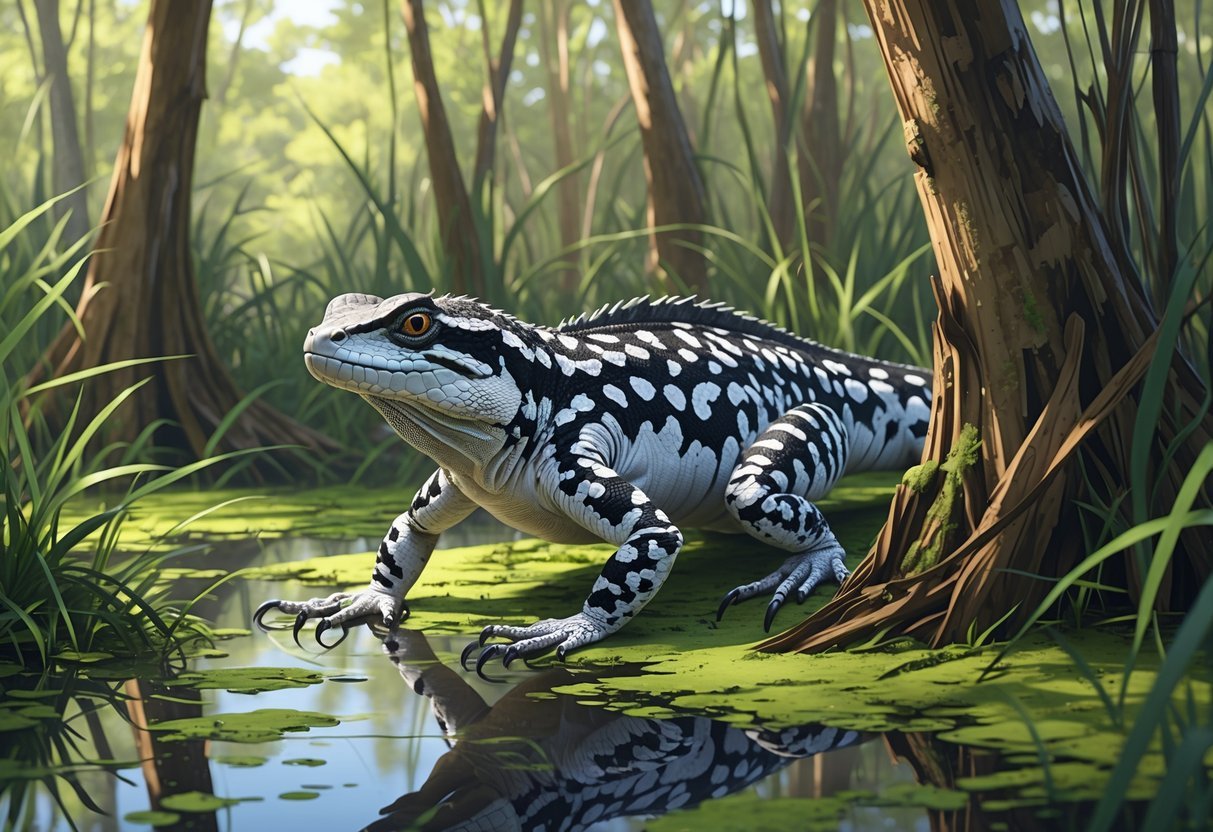
The scientific name for this species is Salvator merianae.They are large lizards that are native to South America. As adults, they can reach lengths of 4-5 feet with robust bodies and powerful jaws. They have a wide diet that includes eggs, small vertebrates, fruits, and carrion which makes them opportunistic omnivores. They reproduce seasonally and can lay clutches of several dozen eggs. Tegus have a relatively long lifespan of up to two decades in favorable conditions.
their adaptability and generalist diet make them successful when introduced outside their native range, which is how they became established in Florida.
physical Characteristics
Argentine tegus are easily recognizable by their distinct mottled pattern of dark bands and lighter scales on their back and tail.Hatchlings frequently enough have brighter, sometimes greenish heads that fade with age. They have thick, muscular tails and strong limbs with sharp claws for digging and tearing. Males tend to be larger than females with more prominent jowls and head size. Their skin is rough with enlarged scales on the head and neck, which supports their burrowing behavior, thermoregulation, and diet that includes hard-shelled eggs.
Natural Habitat
in their native range across argentina, Paraguay, Uruguay, and Brazil, tegus inhabit savannas, open forests, disturbed areas such as field edges or roadsides where they can find shelter in burrows or dense vegetation while having access to diverse food sources. They can also tolerate seasonal flooding and swim between habitats if needed.
Tegus brumate during cooler months by using burrows or dens which influences their breeding timing and movement patterns. Their ability to adapt to human-altered landscapes contributes to their success when introduced outside of South America.
The Invasion of Argentine tegus in Florida
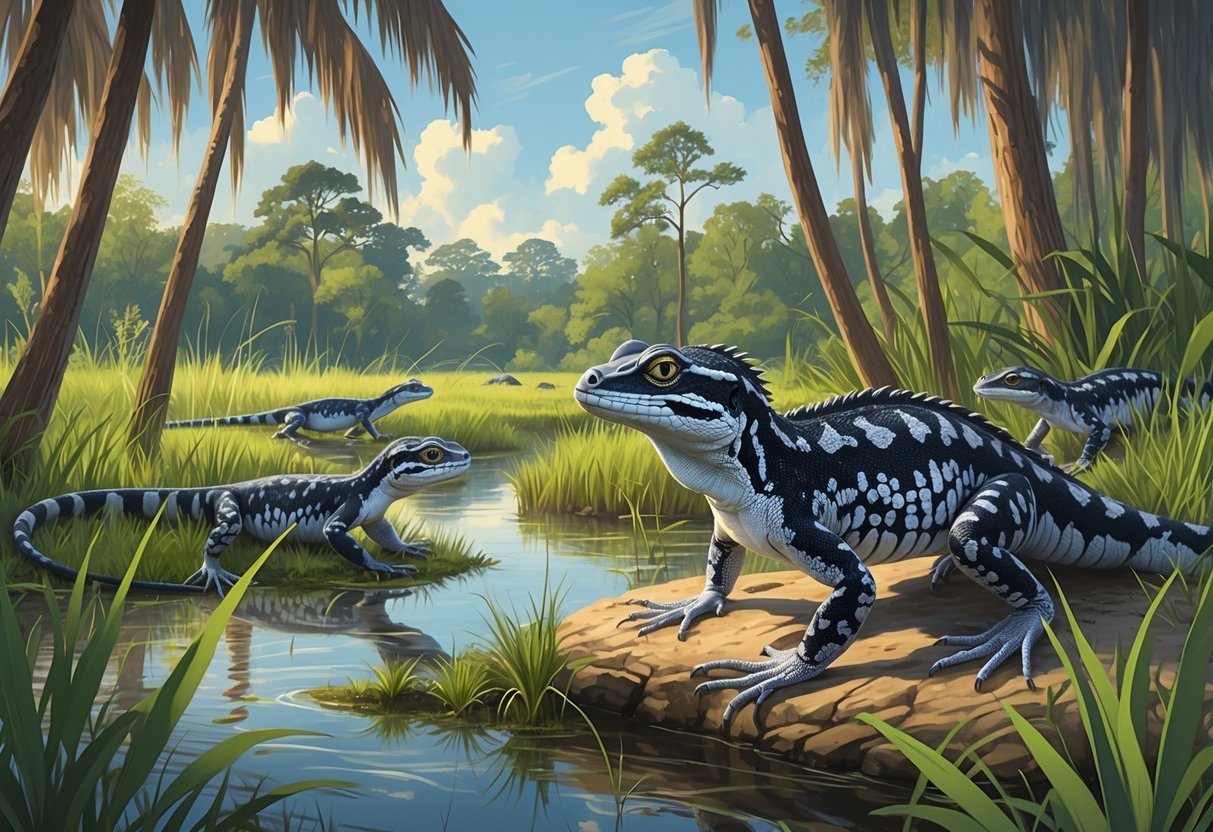
Argentine tegus were introduced to Florida through the pet trade and have as established breeding populations in multiple counties, posing a threat to ground-nesting wildlife.
the most common way for tegus to enter florida is through the exotic pet trade. They were popular pets during the 1990s and 2000s due to their large size and colorful appearance. however, some owners released unwanted adults or juveniles into the wild when they became difficult to care for, while others escaped from poorly secured enclosures. These escaped or released animals reproduced in the wild, with females laying dozens of eggs per year.
The warm winters in southern florida allow tegus to survive brumation and return to active feeding and breeding in early spring, contributing to their rapid spread.
History of Establishment
The earliest established populations of tegus can be traced back to repeated introduction events rather than one single release. Reports and trapping by wildlife agencies in the 2000s and 2010s documented growing numbers in south and southwest Florida. Researchers used radio-telemetry and targeted trapping methods to confirm breeding populations, while studies by USGS helped identify multiple self-reliant populations.
In response, the Florida Fish and Wildlife Conservation Commission (FWC) intensified removal efforts by capturing thousands of tegus. The agency also expanded outreach efforts by encouraging surrender through their Exotic Pet Amnesty Program and urging the public to report sightings through their Exotic Species Hotline (1-888-Ive-Got1) or IveGot1 app.
distribution Across Florida
Established tegu populations are most commonly found in Charlotte, Hillsborough, Miami-Dade, St.Lucie counties where they can be found in suburban areas and also agricultural lands or disturbed habitats such as yards with fence rows and open ground. They can also tolerate marshes and swim between habitat patches,making it easier for them to spread.
State and federal surveys continue to detect new occurrences, with recent reports in parts of southwest Florida and Key Largo. Local managers deploy traps in areas where sightings are reported through IveGot1, while landowners can allow humane removal on private property. If you see a tegu, take a photo, note the location, and report it to the Exotic Species Hotline or IveGot1 app to help target removal efforts.
The Ecological Impact of Argentine Tegus
Argentine tegus have been found to alter nest survival rates, compete with native species for resources such as food and burrows, and change local animal-plant interactions in parts of South Florida.
They pose a direct threat to eggs and hatchlings of reptiles and birds by digging into buried nests. This includes sea turtles and American alligators which are already vulnerable species. Ground-nesting species also face reduced reproductive success due to tegu foraging near beaches or marshes where they lay their eggs.
Tegus have been documented using gopher tortoise burrows as shelter while also preying on tortoise hatchlings. This directly threatens the recruitment of gopher tortoises and also other animals that depend on these burrows for shelter.
Tegu sightings often concentrate near protected areas such as Biscayne National Park or Everglades National Park which raises concerns about their impact on already vulnerable populations. It is important to monitor nesting sites closely and report any sightings promptly to help target removal efforts.
risks To Biodiversity
When established in an area,Argentine tegus can shift community composition by outcompeting native species for resources such as food and burrows. This can have a cascading affect on the entire ecosystem, leading to a decline in biodiversity.
It is crucial to take action now to prevent further spread and protect Florida’s native wildlife. Responsible pet practices, such as not releasing unwanted pets into the wild, can definitely help slow their spread. If you encounter an Argentine tegu in the wild,report it immediately and do not attempt to capture or handle it yourself.
Managing the Invasive Argentine Black and White Tegu in Florida
The argentine black and white tegu (Salvator merianae) is a large, robust lizard native to South America. However, it has become an invasive species in Florida, where it poses a threat to native wildlife and ecosystems.In this article, we will discuss the impacts of tegus on the environment, current management efforts, and how the public can help prevent their spread.
The Impact of Tegus on Native Wildlife
Tegus are opportunistic omnivores that prey on a wide range of items including eggs, hatchlings, small mammals, reptiles, invertebrates, fruit and plant matter. This makes them a significant threat to ground-nesting bird populations as well as other small vertebrates that native predators rely on for food.
In invaded areas of Florida, declines in ground-nesting bird populations have been observed along with altered predator-prey dynamics.Tegus also compete with native mesopredators for food and shelter which can lead to reduced abundance and genetic diversity over time.
Furthermore, tegus are known to change seed dispersal patterns and invertebrate abundances through their diet which can have cascading effects on plant recruitment and food webs. This is especially concerning for sensitive ecosystems such as the Everglades and coastal areas.
Predation and Competition
egg predation is recognized as one of the most immediate threats posed by tegus. They have been known to remove entire cohorts of future adults in a single season through their consumption of eggs.
In addition to predation on eggs, competition for food and burrows puts tegus in direct conflict with native species such as raccoons,
opossums,and gopher tortoises. Tegus’ use of existing burrows also increases competition for shelter and can expose vulnerable species to higher predation risk.
Trapping and telemetry studies have shown that tegus move across landscapes seasonally, increasing their encounter rates with nests and den sites. Reporting tegu sightings helps managers prioritize trapping efforts and reduce their impacts on native wildlife.
Identification and Behavior
Tegus are easily recognizable by their large size, robust bodies, strong limbs, muscular tails, blunt snouts, visible ear openings, and distinct black-and-white banding on their backs. They can reach up to 3.5-5 feet in length as adults.
In Florida, tegus are primarily found in disturbed habitats such as yards, marsh edges,and forest clearings where they hunt for food and burrow for shelter. They are opportunistic omnivores that feed on a variety of items including eggs,
small vertebrates,invertebrates,
fruit,and plant matter.
Tegus are primarily terrestrial but can climb low branches and swim well. Their ability to consume a wide range of food sources makes them adaptable invaders in fragmented suburban areas as well as natural habitats.
Current Management Efforts
multiple state and federal agencies work together to manage the spread of tegus in Florida through trapping programs,
telemetry studies,outreach,and removal efforts.
These programs aim to limit the range expansion of tegus in order to protect biodiversity hotspots.
FWC Programs and initiatives
The florida Fish and Wildlife conservation Commission (FWC) leads regulatory efforts related to nonnative reptile protection
and manages ownership through specific rules that must be followed by pet owners.
They also support removal programs,fund research,and issue guidance on humane handling
and disposal of tegus on private lands with owner permission.
FWC partners with other agencies such as the U.S. Fish and Wildlife Service, National Park Service, USGS, and local agencies to prioritize areas for trapping efforts. These include Miami-dade,
St. Lucie,and Everglades-adjacent lands.
On-the-ground actions include contracted and agency trapping,
radio-and GPS-telemetry studies to map movements,and diet analyses to quantify predation on nests.
Trapping campaigns are timed to tegu activity seasons and target known high-risk nesting sites.
Reporting Tegu Sightings
The success of removal efforts relies heavily on timely reporting from the public.
If you spot a tegu in Florida, it is important to report it promptly using FWC’s reporting tools or by calling their Exotic Species Hotline at 888-483-4681.
Be sure to provide the exact location and time of the sighting as well as any photos you may have taken.
Sightings can also be reported through online portals or local cooperative invasive species management areas (CISMAs).
Community reporting programs encourage residents to record sightings,
trap locations,and evidence of nesting which helps agencies triage tips
and dispatch removal teams when necessary.
Challenges and Successes
The control of invasive species like tegus faces both biological and social hurdles that can affect management efforts.
Tegus are large, omnivorous,and capable of surviving mild winters which makes complete eradication difficult in fragmented suburban areas where they have established populations.
Though, there have been documented successes in reducing local densities after intensive trapping efforts
and new invading species have been discovered through these programs.
Research using VHF/GPS telemetry has also improved trap placement
and timing which has led to increased capture rates.
Despite these successes, funding limitations,
land-access issues,and the ongoing pet-trade pathway make long-term control difficult.
However, coordinated efforts between multiple agencies and public reporting have slowed the expansion of tegus in prioritized zones.
Prevention,Pet Ownership,and Public Involvement
The best way to prevent the spread of tegus is through responsible pet ownership and prompt reporting of sightings.
Florida has specific rules for owning nonnative reptiles which must be followed by pet owners.If you can no longer care for a tegu,
the Exotic Pet Amnesty Program provides a no-questions,
no-penalty option for surrendering unwanted animals which helps reduce releases into the wild.
If you do choose to keep a tegu as a personal pet,
it is important to follow FWC’s regulations for containment and care
to prevent escapes and ensure humane treatment of the animal.
The public can also help by reporting sightings promptly
and providing good documentation such as clear photos,
exact location,and time.This details helps agencies manage removal efforts more effectively
and track patterns of invasion. By working together, we can definitely help protect Florida’s native wildlife from invasive species like the Argentine black and white tegu.
How to Effectively Manage and Remove Invasive Tegus from Your property
Invasive species can cause significant harm to the environment, economy, and human health. One such invasive species is the Argentine black and white tegu, a large lizard native to South America. These lizards have been introduced into Florida’s ecosystem through the pet trade and have quickly spread throughout the state.
if you live in Florida, it is indeed essential to be aware of tegus’ presence on your property and take necessary steps to manage or remove them. Here are some tips on how you can effectively handle this invasive species while keeping your property safe.
- Understand Tegus’ Behavior
Before taking any action,it is crucial to understand tegus’ behavior and habits. These lizards are opportunistic feeders and will eat almost anything they come across, including small mammals, birds, eggs, fruits, vegetables, pet food, and even garbage. They are also excellent climbers and diggers that can create extensive burrows for shelter.
- Secure Pet Food Indoors
One way to prevent tegus from entering your property is by storing pet food indoors in sealed containers. This will not only keep your pets safe but also eliminate a potential food source for these lizards.
- Seal Crawlspaces And Vents
Tegus can enter buildings through crawlspaces or vents; therefore it is essential to seal these openings with mesh screens or other barriers that will prevent their entry.
4.Clear Brush And Debris
Tegus prefer areas with dense vegetation for hiding and nesting sites; therefore clearing brush or debris around your property can make it less attractive for them.
5.Get Landowner Permission Before Removal Or Killing
If you find a tegu on private property, it is indeed crucial to get landowner permission before removing or killing it as per local laws.
6.Join Local Removal Or Monitoring Efforts
You can also join local removal or monitoring efforts through county invasive species groups or volunteer programs. These collaborative efforts between the Florida Fish and Wildlife Conservation Commission (FWC) and partners run trapping and survey projects that you can support.
- Use Humane Removal Methods
If you choose to remove tegus from your property, it is essential to use humane methods such as live traps or hand capture. Killing tegus should only be considered as a last resort.
- Dispose of Captured Tegus Properly
If you successfully capture a tegu, it is indeed crucial to dispose of it properly by euthanizing it humanely or turning it over to FWC for disposal.
- Educate Others
Spread awareness about the dangers of invasive species like tegus by educating your friends, family, and neighbors about their presence in Florida and how they can help prevent their spread.
managing and removing invasive tegus from your property requires understanding their behavior, securing potential food sources, sealing entry points, clearing vegetation, getting landowner permission before removal or killing them, joining local efforts for monitoring and removals using humane methods while disposing of captured lizards properly. By following these tips, you can effectively protect your property from this harmful invasive species while also contributing to its control in Florida’s ecosystem.


This invasive species poses a significant threat to native wildlife in Florida.