
If you come across a triangular-headed snake with a thick body near water in Florida,it is likely to be a cottonmouth. However, if the snake appears slimmer with round pupils and patterned bands but lacks heat pits, it is most likely a nonvenomous water snake.
Cottonmouths are venomous pit vipers while most water snakes (such as the Florida banded watersnake) are harmless, although they may look similar.
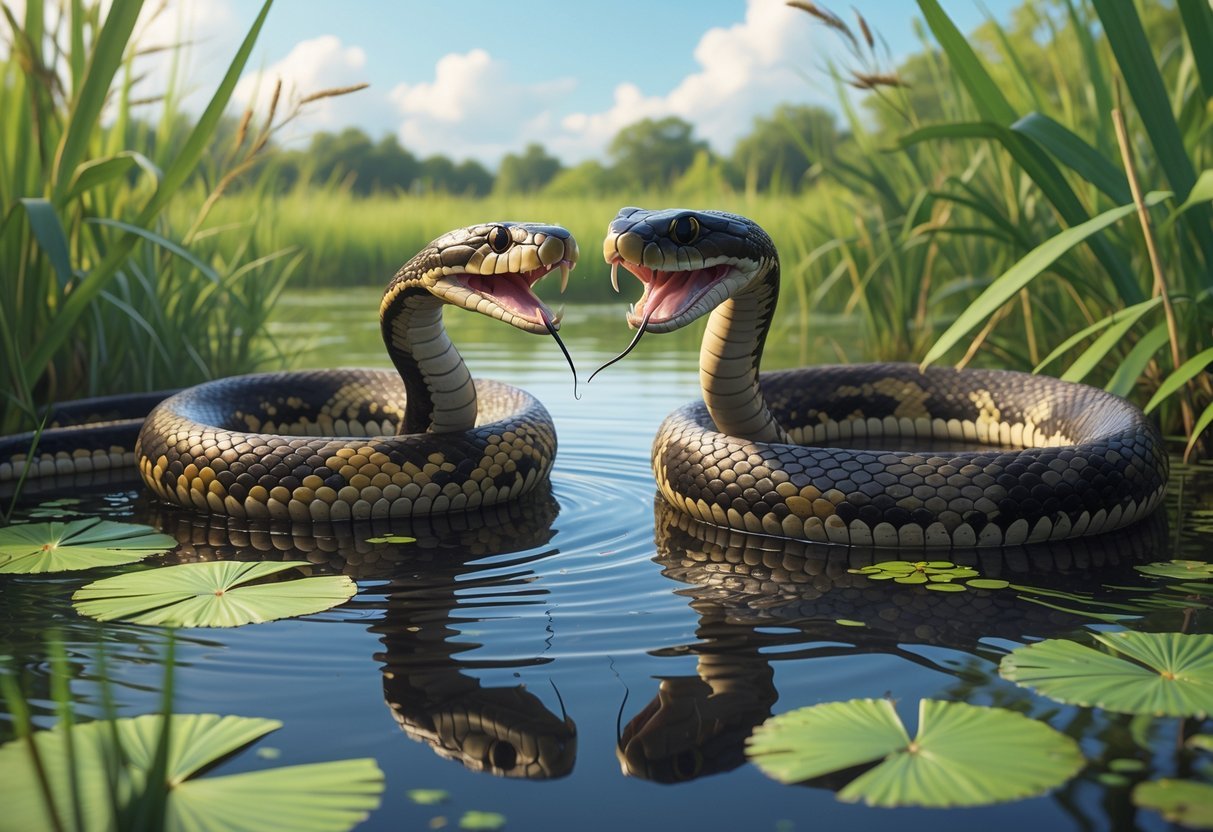
In this article, we will discuss how to differentiate between these two species based on their appearance, behavior and habitat. We will also cover critically importent data such as the medical implications of being bitten by a cottonmouth and how to handle close encounters without putting yourself or the snake at risk.
Understanding Snakes in Florida

Florida is home to various species of snakes with different habits, habitats and risks. It is important to know which species you are likely to encounter as well as why accurate identification is crucial for both safety and conservation purposes.
There are many myths surrounding snakes that often lead to misidentification.
Native Snake Species in Florida
Florida is home to numerous native snakes, including both venomous and nonvenomous water-adapted species. Some of the venomous species you may encounter include the cottonmouth (Agkistrodon piscivorus), eastern diamondback rattlesnake, and coral snake.
Each of these species has distinct ranges and habitats within the state. Nonvenomous water snakes, also known as watersnakes, include species such as the Florida banded watersnake (Nerodia fasciata pictiventris) and plain watersnake.
These snakes prefer ponds, marshes, swamps and slow-moving rivers where they feed on fish, frogs and amphibians.Juveniles and adults can vary in color and pattern which can make identification challenging.
However, there are some key differences to look out for such as size and head shape. Watersnakes are usually slimmer with round pupils and lack facial heat pits while pit vipers (cottonmouths) have heavier bodies with elliptical pupils and heat-sensing pits between their nostrils and eyes.
Habitat overlap is common so it is important to pay attention to behavior as well as physical characteristics when trying to identify a snake.
The Importance of Accurate Identification
Accurate identification is crucial for both your safety as well as the fate of the snake. By correctly recognizing a nonvenomous watersnake you can avoid unnecessary killing or relocation of a harmless native species.
Misidentifying a cottonmouth could lead to risky close approaches which could result in being bitten by a venomous snake. In case of an emergency situation where someone has been bitten by a snake, knowing which venomous species are present in the area can definitely help guide emergency response.
It is important to be familiar with local venomous species and their typical habitats such as water edges, ditches and marshlands. This will help you avoid risky areas and know when to call for professional wildlife control. Some practical steps you can take to identify a snake include noting pupil shape, presence of heat pits, body thickness, head shape and behavior.
If you are unsure about the identification of a snake, it is indeed best to keep your distance, secure any pets and contact local wildlife professionals rather than attempting capture or killing the snake.
Common Myths and Misidentifications
One common myth is that any water snake is a cottonmouth. This misconception often leads to fear-driven mistakes as many watersnakes mimic cottonmouth color patterns especially when they are older or darker in color.
Another false belief is that a triangular-headed snake is always venomous. However, watersnakes can flatten their heads when threatened which can make them appear triangular in shape.
The myth that an open mouth equals venomous also ignores the fact that both cottonmouths and some watersnakes display mouth gapes as bluffing behavior. It is important not to rely on one single trait but instead use multiple cues such as pupil shape, heat pits, body mass, scale pattern and behavior along with habitat context for accurate identification. if unsure about the identity of a snake it is best to keep your distance and consult reliable local resources before taking any action.
Cottonmouth vs Water Snake Identification

There are several key differences between venomous cottonmouths and nonvenomous water snakes that can help you identify them. These include head shape, eye pupils, body build and banding patterns. It is important to focus on specific traits such as pupil shape, presence of heat pits and the arrangement and width of crossbands when trying to differentiate between these two species.
Key Visual Differences
Start by looking at the overall build and behavior of the snake.Cottonmouths (Agkistrodon piscivorus) are heavy-bodied with a stout midsection while banded water snakes such as the Florida banded watersnake (Nerodia fasciata pictiventris) have a slimmer, more muscular body for swimming. While size can be an indicator, there is some overlap as cottonmouths commonly reach 30-48 inches while banded watersnakes are usually under 42 inches.
Color can also vary with age and location so it is best to rely on structural features rather than color alone for identification purposes. note any open-mouth defensive displays – cottonmouths may show white inside their mouth while watersnakes typically flatten their bodies and strike without displaying their mouth.
Head Shape and Eye Structure
Examine head shape from both above and the side.cottonmouths have a distinctively triangular head that appears broader near the neck while watersnakes have a more gradual taper from head to body which makes them appear less triangular when viewed from above.
If you can safely observe from a distance, take note of the eyes and pupils using binoculars or zoomed photos instead of approaching or attempting to handle any snake just for this purpose. Florida cottonmouths (pit vipers) have vertical, elliptical pupils and small heat-sensing pits between their nostrils and eyes while banded and brown watersnakes (Nerodia spp.) have round pupils and lack heat pits.
Pattern and Coloration Features
Compare the shape and placement of crossbands. Cottonmouths have dark crossbands that are usually wider on the sides and narrower on top of the body.Juvenile cottonmouths may also have a radiant yellow or chartreuse tail tip which can be misleading as it may make them appear harmless.
Banded water snakes, on the other hand, have bands or vertical bars that typically narrow on the sides and appear broader on top – opposite to cottonmouths. The Florida banded watersnake may also show alternating dark and light bands when young which fade with age. Saltmarsh snakes and brown watersnakes can be more uniformly brown but still display banding or speckling. When identifying species, look for consistent band orientation rather than overall darkness.
Distinctive Physical features
In addition to overall heft,head geometry,bright tail markings in juveniles as well as posture differences when threatened can help you differentiate between a cottonmouth snake from nonvenomous water snakes.
Body Size and Shape
Cottonmouths are noticeably heavier-bodied compared to most Nerodia water snakes with adults commonly measuring 30-48 inches in length. They also tend to have a thicker trunk which makes them appear stout near the middle of their body.
If you see a snake with a heavy
Understanding the Differences Between Cottonmouths and Water Snakes
The cottonmouth and water snake are two species of snakes that are often confused with each other. While they may look similar at first glance, there are several key differences between these two species that can help you identify them correctly.
Physical Appearance
The most obvious difference between cottonmouths and water snakes is their physical appearance. Cottonmouths have a dark, almost black coloration with distinct white or yellow bands on their bodies.They also have a triangular-shaped head and a thick body compared to water snakes.
Water snakes, on the other hand, have lighter coloration with darker bands or blotches along their bodies. Their heads are also smaller and more rounded than those of cottonmouths.
Scales
Cottonmouths have keeled scales, which means they have raised ridges on each scale that give their skin a rough texture. This can make them appear less glossy than water snakes in direct light.
water snakes also have keeled scales but may appear glossier due to their overall scale pattern and sheen.
Tail Characteristics
Juvenile cottonmouths often display a sulfur-yellow tail tip as a clear field mark, while juvenile water snakes lack this feature. However, as adults, both species may not show this characteristic trait.
In terms of tail shape, watersnakes typically have longer tails relative to body thickness compared to the shorter tails of cottonmouths.
Habitat Preferences
Cottonmouths prefer slow-moving or still waters with heavy vegetation such as marsh edges, swampy forests, cypress domes, and lake margins. They can also tolerate brackish water in tidal creeks near the coast.
Water snakes,conversely,are commonly found in shallow freshwater habitats such as ponds,canals,and ditches. They may also bask on rocks or emergent vegetation and hunt for fish and amphibians in clearer,shallower water than cottonmouths.
Behavioral Differences
Cottonmouths often rely on conspicuous displays to warn potential threats before striking. They may coil, gape to show their white-lined mouth, vibrate their tail, and flatten their body to appear larger. Nonvenomous water snakes may also display when cornered but typically flatten their bodies without gaping.
In terms of swimming behavior, cottonmouths tend to float with a large portion of their body at the surface due to inflating their lungs for increased buoyancy. Water snakes usually swim with most of their body submerged and only keep their head above water.
During reproduction and early life stages, cottonmouth females give birth to live young every other year while nonvenomous watersnakes can produce larger litters annually. Newborn cottonmouths have fully developed venom glands while watersnakes do not possess venom glands at all.
Venom Differences
Cottonmouths are venomous pit vipers with heat-sensing facial pits that inject a complex mix of enzymes specialized for breaking down tissue and impairing clotting. Water snakes lack venom glands altogether but can cause mechanical injuries from bites that risk infection rather than envenomation.
In Conclusion
while cottonmouths (Agkistrodon piscivorus) and water snakes (Nerodia species) may look similar at first glance, there are several key differences between these two species that can help you identify them correctly. These differences include physical appearance, scales, tail characteristics, habitat preferences, behavioral traits, and venom potency and delivery. By understanding these differences, you can safely and accurately identify these two species in the wild.
References
1.Florida Fish and Wildlife Conservation Commission. (n.d.). Cottonmouths: Agkistrodon piscivorus. Retrieved from https://myfwc.com/wildlifehabitats/profiles/reptiles/cottonmouth/
2.Florida Fish and Wildlife Conservation Commission. (n.d.). Water Snakes: Nerodia species. Retrieved from https://myfwc.com/wildlifehabitats/profiles/reptiles/water-snakes/
3. National Park service. (2019). Cottonmouth Snake – Agkistrodon piscivorus conanti – Everglades national Park (U.S.). Retrieved from https://www.nps.gov/ever/learn/nature/cottonmouth.htm
4.National Park Service.(2019). Banded Watersnake – Nerodia fasciata pictiventris – Everglades National Park(U.S.).Retrieved from https://www.nps.gov/ever/learn/nature/banded-watersnake.htm
Understanding the Consequences of a Cottonmouth Bite
A bite from a cottonmouth snake,also known as a water moccasin,can have serious and perhaps life-threatening effects.These venomous snakes are found in the southeastern United States and are known for their aggressive nature and potent venom.
If you are unfortunate enough to be bitten by a cottonmouth, it is important to understand the potential consequences and take immediate action to seek medical treatment. In this article, we will discuss the effects of a cottonmouth bite and what steps should be taken in case of an emergency.
Immediate Symptoms
The first thing you will likely notice after being bitten by a cottonmouth is intense pain at the site of the bite. This pain may be accompanied by swelling, bruising, and progressive tissue damage near the fang punctures. The venom of these snakes contains metalloproteinases and PLA2 enzymes that can cause destruction of cell membranes and bleeding in the affected area.
In certain specific cases, systemic effects may also occur. These can include nausea, dizziness, coagulopathy (bleeding or impaired clotting), hypotension (low blood pressure), or kidney injury. While these symptoms are less common than local effects, they should not be ignored as they can indicate severe envenomation.
Treatment Options
If you have been bitten by a cottonmouth snake, it is crucial to seek immediate medical attention. Call emergency services right away and get to a hospital as soon as possible. The definitive treatment for clinical envenomation is antivenom therapy using products such as crotaline polyvalent antivenom.
In addition to seeking medical help right away, there are some steps that can be taken before arriving at the hospital:
- Immobilize the affected limb at heart level to slow the spread of venom.
- Remove any constrictive jewelry or clothing near the bite site.
- Keep the victim calm to prevent rapid venom circulation.
Notably cutting the wound, sucking out venom, or applying a tourniquet are not recommended as they can cause further harm and do not effectively remove all of the venom from the body. If possible, try to safely capture or take a photo of the snake for identification purposes. This can definitely help guide antivenom choice and treatment.
Treatment at The Hospital
Once at the hospital, clinicians will assess wound progression and coagulation. They will also monitor renal function and provide appropriate antivenom therapy and wound care as needed.In severe cases, intensive care may be required for respiratory or neurological compromise.
in Conclusion
A cottonmouth bite should never be taken lightly as it can have serious consequences if left untreated. It is important to seek immediate medical attention in case of a bite and follow proper first aid measures while waiting for help. By understanding the effects of a cottonmouth bite and taking prompt action, you can increase your chances of a full recovery from this potentially risky encounter with one of nature’s most formidable creatures.


It’s important to know the distinctions between these two species for safety reasons in Florida.