
encountering a snake in Florida can be a nerve-wracking experience, especially if you are unsure of its species and potential threat. Though, by paying attention too simple visual cues such as body shape, head shape, scale pattern, habitat, and behavior, you can quickly distinguish between venomous and harmless snakes. This will allow you to respond safely and confidently.
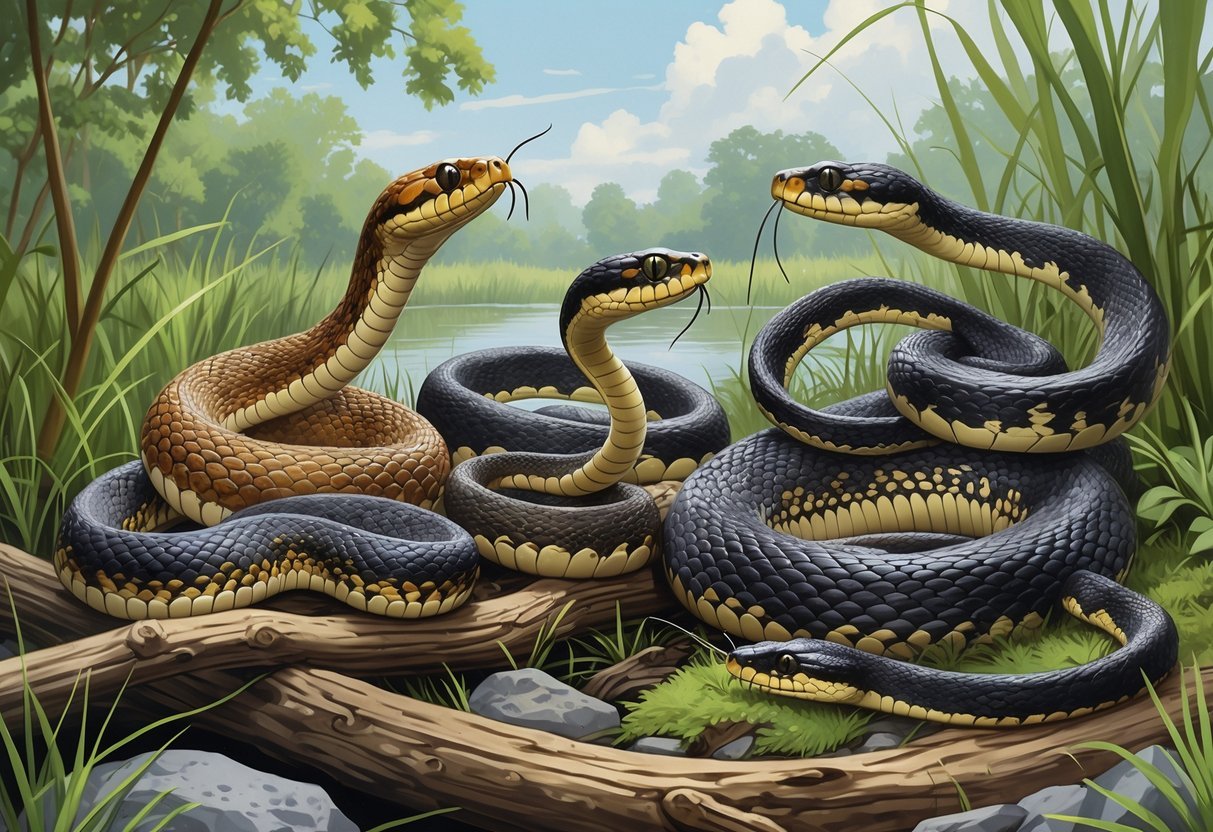
In this guide tailored specifically for Florida conditions, we will walk you through identification tips that will help you identify the most common venomous species while also pointing out nonvenomous, aquatic, rare, and invasive snakes that you may encounter.
Additionally, we will provide practical safety advice so that you can protect yourself while exploring yards, wetlands or trails without causing harm to these important creatures or their ecosystems.
Identifying Snakes in Florida

The key factors to consider when identifying a snake in Florida are its size, head shape,
eye pupils,
color pattern,
and behavior.
Pay attention to whether the snake is thick or slender,
has a triangular head,
vertical pupils,
heat-sensing pits,
or distinctive banding or rattles.
These features can help differentiate between venomous and nonvenomous species.
Critically important Physical Features
The first thing to check is the overall body shape.Many nonvenomous snakes in Florida, such as rat snakes and racers, have a slender body with a round head that blends into the neck.
in contrast,venomous species like cottonmouths and rattlesnakes tend to have a thicker body and may coil up defensively. It is also helpful to measure or estimate the length and girth of the snake when it is safe to do so.
Keep in mind that juvenile snakes may look different from adults, so take note of their scale texture and whether they have keeled (ridged) or smooth scales.Also, be on the lookout for a rattle on the tail – eastern diamondbacks and other rattlesnakes have segmented rattles that can be seen or heard from a distance.
Another important feature to consider is the presence of heat-sensing pits. Pit vipers (rattlesnakes and cottonmouths) have small depressions between their nostrils and eyes on either side of their head. These pits appear as dark indentations that are visible even from afar.
Color Patterns and Markings
When identifying snakes in Florida, it’s essential to focus on patterns rather than just color since lighting conditions can affect color perception. Venomous species ofen display characteristic patterns: eastern diamondbacks have hourglass diamond patterns with a dark center surrounded by lighter colors; cottonmouths typically have broad dark crossbands when young; while coral snakes are known for their red, yellow, and black rings with “red touch yellow” markings found in most North American coral species.
Though, nonvenomous species may also mimic these patterns for protection against predators. For example, some kingsnakes and milk snakes show banding similar to coral snakes but follow a different color order.
Pay attention to the edges of the pattern and the placement of stripes. Longitudinal stripes down the body often indicate racers or rat snakes, while alternating bands or blotches suggest water snakes or kingsnakes. Also, take note of any contrasting head or neck markings.
A conspicuous collar or nape patch can also help distinguish a species quickly. if possible, take a photograph or sketch the pattern and compare it to a reliable Florida field guide.
Eye Shape and Head Structure
The eyes and head shape are crucial features to observe from a safe distance when identifying snakes in Florida. Pit vipers (cottonmouths, copperheads, rattlesnakes) typically have a broad, triangular head with a distinct neck and vertical (cat-like) pupils.
In contrast,nonvenomous snakes usually have round pupils and a more streamlined head. Keep in mind that pupil shape can be challenging to see in shining daylight or from afar.
You can also use head profile and scale arrangement as secondary cues: pit vipers have loreal pits (heat-sensing pits) between their eyes and nostrils that appear as small indentations; whereas colubrids lack these pits. However, it’s essential not to rely on just one trait for identification.
it’s worth noting that after feeding or when feeling threatened, some nonvenomous species may exhibit swelling around their heads that mimics the triangular shape of pit vipers’ heads. Therefore, it’s best to combine eye shape with other features such as head width and presence of pits for more accurate identification.
behavioral Clues
The way a snake moves and reacts can also provide valuable clues for identification purposes. For example,
black racers move quickly
and tend to flee when disturbed;
they often glide with a straight body and hold their head high.
Conversely,
water snakes and cottonmouths are more likely to be found near water
and may remain coiled or gape when threatened.
Pay attention to tail behavior as well.
Rattlesnakes will vibrate their rattle when disturbed, while nonvenomous species may mimic this behavior by vibrating their tail in dry leaves without producing a rattling sound.
It’s also helpful to note feeding behavior. For instance, rat snakes are known for climbing trees and hunting, while water snakes primarily feed on fish and frogs. Consider the time of day and habitat when observing these behaviors.
Coral snakes prefer leaf litter and loose soil in upland habitats, while eastern diamondbacks favor dry sandy areas with palmetto plants. By combining behavioral clues with physical features and patterns, you can narrow down your identification before approaching or intervening.
Venomous Snakes in Florida

While there are several snake species found in Florida,
only a small number of them are venomous.
It’s essential to learn how to recognize these species,
their identifying marks,
and how to respond safely if you encounter one.
Eastern Diamondback Rattlesnake
The Eastern Diamondback Rattlesnake (Crotalus adamanteus) is the largest venomous snake found in Florida. It has a heavy body with dark diamond-shaped dorsal patterns edged in lighter colors
and a distinct rattle at the tip of its tail.
Adults typically measure between 3-5 feet, with some reaching lengths of over 6 feet. You are most likely to find them in dry, sandy habitats such as pine flatwoods, palmetto scrub, and coastal dunes.
These snakes are active during cooler months and tend to shift towards nocturnal activity in hot weather. Their venom is hemotoxic and can cause severe local tissue damage and systemic effects. Therefore, if you get bitten by an eastern diamondback rattlesnake,
seek immediate medical attention
and antivenom when necessary.
If you hear a rattle or spot an eastern diamondback rattlesnake,
it’s best to back away slowly
and give the snake enough space.Do not attempt to handle or kill it.
Note that the timber rattlesnake (Crotalus horridus) also occurs in parts of Florida.
You can recognize it by its narrower body and different patterning where present.
Cottonmouth (Water Moccasin)
The Cottonmouth or Water Moccasin (Agkistrodon conanti) is commonly found in wetlands,
swamps,
marsh edges,
and slow-moving streams.
It has a thick body with a triangular head
and vertical pupils;
its coloration ranges from brownish to olive with darker crossbands that may appear even darker when wet.
You are most likely to see them basking on logs or near water’s edge as they are semi-aquatic and excellent swimmers. Cottonmouths may bite when provoked or cornered,
Florida’s Native Snakes: Identification and Safety Tips
Florida is home to a diverse array of snake species, ranging from harmless non-venomous snakes to possibly dangerous venomous ones. While most snakes are shy and will avoid human contact, it is important to be able to identify the different species in case of an encounter.This article will provide information on how to identify common snake species in Florida and safety tips for dealing with them.
Venomous Snakes in Florida
There are six venomous snake species found in Florida: the Eastern Diamondback Rattlesnake, Timber Rattlesnake, Dusky Pygmy Rattlesnake, Cottonmouth (also known as Water Moccasin), Copperhead, and Coral Snake. These snakes should be avoided at all costs and medical attention should be sought immediately if bitten.
Rattlesnakes
The Eastern Diamondback Rattlesnake (Crotalus adamanteus) is the largest venomous snake in North America, reaching lengths of up to 8 feet. It has a distinctive diamond-shaped pattern on its back with a rattle at the end of its tail. The Timber Rattlesnake (Crotalus horridus) is another large rattlesnake found in Florida with a similar pattern but smaller size.
The Dusky Pygmy rattlesnake (Sistrurus miliarius) is much smaller than its larger counterparts, typically only reaching lengths of 15-24 inches. It has a stout body and short rattle that may not always make noise when shaken.
cottonmouths
the Cottonmouth or Water Moccasin (Agkistrodon piscivorus) can be identified by its broad, triangular head and stout body.It is indeed typically found in or near water and may display a defensive gape with its mouth open when threatened.
Copperheads
The Copperhead (Agkistrodon contortrix) is a relatively small venomous snake, reaching lengths of 2-3 feet. It has a distinctive copper-colored head and hourglass-shaped bands on its body.
Coral Snakes
The Coral snake (Micrurus fulvius) is the most dangerous venomous snake in Florida due to its potent neurotoxic venom. it can be identified by its red, yellow, and black banded pattern. Remember the rhyme ”red touches yellow, kill a fellow; red touches black, friend of Jack” to help distinguish it from non-venomous look-alikes.
It’s critically important to note that coral snakes frequently enough produce minimal fang marks when biting, so any suspected bite should be evaluated by medical professionals even if symptoms seem mild.
Non-Venomous Snakes in Florida
While there are many non-venomous snake species in Florida that pose no threat to humans,it’s important to remember that all snakes should be treated with caution and respect. Hear are some common non-venomous snakes you may encounter:
Rat Snakes
Rat snakes (Pantherophis spp.) are commonly found throughout Florida and come in various colors and patterns depending on their region. They are excellent climbers and can frequently enough be found near human structures where they hunt rodents for food.
Kingsnakes
Kingsnakes (Lampropeltis spp.) are another common non-venomous species found in Florida. They have a distinctive banded or ringed pattern and are known for their ability to eat other snakes, including venomous ones.
Black Racer
The Black Racer (Coluber constrictor) is a long, slender snake with a glossy black color. They are commonly found in open habitats and can climb low vegetation. While they may bite if handled or cornered, they are not venomous.
Eastern Indigo Snake
The Eastern Indigo Snake (Drymarchon couperi) is the largest native snake in the U.S., reaching lengths of up to 7 feet.They have a glossy blue-black sheen and are protected by law in Florida due to their declining population.
Safety Tips for Dealing with Snakes
If you encounter a snake, it’s critically important to remember these safety tips:
- Do not attempt to handle any snake unless you are an expert.
- Teach children to avoid any small, brightly banded snakes.
- If you suspect a coral snake bite, seek urgent medical care even if symptoms seem mild.
- Avoid stepping over logs or reaching into dense groundcover where snakes might potentially be hiding.
- Remember that small size does not equal harmlessness-seek urgent care for any rattlesnake bite.
In addition, it’s important to respect the natural habitat of snakes and avoid disturbing them. If you come across an endangered species such as the Eastern Indigo Snake, do not disturb it and report sightings to local wildlife authorities when required.
Remember that all snakes play an critically important role in our ecosystem as predators of rodents and other pests. By understanding how to identify different species and safely coexist with them, we can appreciate these interesting creatures and ensure our own safety.
Unique and Rare Florida Snakes
Florida is home to a diverse array of snake species, including some that are rare or unique in their appearance and behavior. These snakes can be found in various habitats throughout the state, and it’s important to know how to identify them correctly.
The Rainbow Snake and Mud Snake
The rainbow snake (Farancia sp.) is a stunningly beautiful species with glossy black or iridescent scales and a bright red or orange belly. This distinctive coloration makes it easy to identify in the field. You can find these snakes near clear, slow-moving rivers, marsh edges, and canals where they hunt for eels and fish.
Mud snakes (Pseudelaphe/Pseudacontia sp.), on the other hand, share the same bright ventral coloration but have a more robust body shape. They are often found in swamp margins, cypress domes, and gopher tortoise burrows after rain. Both of these species are nonvenomous but rarely seen due to their secretive nature.
Crowned snakes and Blind Snakes
florida crowned snakes (Tantilla relicta) are small, slender snakes with distinct dark caps on their heads. They can be found under leaf litter or logs in pine flatwoods and coastal scrub habitats where they feed on centipedes and other small invertebrates.
Brahminy blindsnakes (Ramphotyphlops/Indotyphlops braminus) are tiny worm-like creatures that resemble earthworms. They were introduced to Florida from Asia but have since become established in urban areas across the state. You can identify them by their uniform dark coloration, tiny head indistinct from the tail, and habit of appearing after irrigation or rain.
Earthsnakes and Swampsnakes
Earthsnakes, such as the smooth earthsnake (Virginia valeriae) and rough earthsnake (Haldea striatula), are small, secretive snakes that live under leaf litter and loose soil. They have plain, muted colors and feed on earthworms and soft-bodied invertebrates. Swampsnakes, like the glossy swampsnake (Liodytes rigida), are stout, semiaquatic snakes with a glossy dark dorsum and lighter underside. They can be found in cypress sloughs, marshes, and fishless wetlands where they feed on small amphibians.
Invasive Snakes in Florida
Unluckily, Florida is also home to several large nonnative snake species that pose a threat to native wildlife. These include Burmese pythons (Python bivittatus), boa constrictors (Boa constrictor), and green anacondas (Eunectes murinus).
Burmese Pythons
Burmese pythons are commonly found in South Florida wetlands where they prey on mammals, birds, and reptiles. They can grow up to 15 feet long and have distinctive brown-to-tan blotches with darker borders on a lighter background.
If you encounter a python in the wild,do not attempt to handle it or relocate it yourself. Instead, contact local authorities or licensed snake relocation services for assistance.
Boa Constrictors and Anacondas
Boa constrictors appear as scattered populations primarily in southern Florida while green anacondas are rarely reported but can reach over 15 feet long. Both of these species kill prey by constriction and can threaten native wildlife and pets. If you keep these species as pets, it is important to follow containment rules and never release them into the wild.
Safety and Conservation
It’s important to know how to safely respond if you encounter a snake in Florida. Stay calm,give the snake space,and do not attempt to handle or kill it. Rather, contact local authorities or licensed snake relocation services for assistance.
Additionally, it’s crucial to take steps to protect native snakes and their habitats. This includes maintaining yard hygiene by removing brush piles and sealing entry points around your home. When relocating snakes yourself (only if trained and legal), use proper equipment such as long-handled hooks or tongs.
By learning about florida’s unique snake species and taking steps to coexist with them safely, we can help preserve these important creatures for future generations.
The Importance of Snakes in the Ecosystem
Snakes play a crucial role in maintaining the balance of ecosystems. They help control populations of rodents, amphibians, and insects that can cause damage to crops, spread diseases, or harm native plants. In Florida, there are both native and protected species of snakes, so it is indeed critically important to follow local regulations before attempting to move them.
Controlling Pest Populations
One of the main benefits of having snakes in an ecosystem is their ability to control pest populations. Species like the black racer and corn snake are known for reducing rodent numbers around homes and agricultural areas. This not only helps protect crops but also reduces the risk of disease transmission from these pests.
In addition to controlling rodents, snakes also play a role in regulating insect populations. By preying on insects like mosquitoes and grasshoppers, they help maintain a healthy balance within their habitat.
Predator-Prey Dynamics
The presence of snakes also supports diversity among other species within an ecosystem.Snakes serve as prey for wading birds,raccoons,and larger reptiles such as alligators. Removing snakes from an area can disrupt this delicate predator-prey dynamic and lead to an increase in small mammal abundance.
This increase can have negative consequences such as crop loss or increased disease vectors due to higher rodent populations.
Taking Steps to Protect Native Snake Species
To ensure that native snake species continue to thrive in their natural habitats,there are steps that individuals can take:
- Create natural brush corridors and maintain native plantings that support small mammals and amphibians; this will reduce habitat fragmentation which can be harmful to snake populations.
- Provide small refuges such as rock piles or downed logs away from high-traffic residential areas to encourage snakes to remain in wild pockets rather than yards.
- When landscaping, use gravel or open mulch near foundations to deter cover that snakes use.
- Keep pet food stored and trash secured to avoid attracting rodents that draw snakes closer to homes.
- If a snake must be removed, contact licensed snake relocation services for humane and legal handling.
- Report sightings of rare or protected snakes to local wildlife agencies for monitoring and conservation purposes.
In addition,supporting local conservation groups that restore wetland habitats and control invasive predators can also help protect native snake species.
to sum up
Snakes are an important part of our ecosystems. They play a vital role in controlling pest populations, maintaining predator-prey dynamics, and limiting the spread of invasive species. by taking steps to protect native snake species and their habitats, we can ensure their continued presence in our environment.


This guide was extremely helpful in identifying the different types of snakes in Florida and knowing how to stay safe while exploring their habitats.