
The legal removal and humane killing of green iguanas on private property in south Florida is permitted year-round with the landowner’s permission.Though, recent changes to regulations now allow for the capture and sale of invasive iguanas under certain conditions.
It is important to note that relocation of captured iguanas within Florida is prohibited, and specific permits or follow-up rules are required for actions such as possessing live captures for resale or removing iguanas from certain public lands.
This article will provide an overview of the current legal status, recent policy changes, and practical limitations surrounding the removal of green iguanas in South Florida. It will also offer guidance on when it is indeed appropriate to handle iguanas yourself versus hiring professionals, which activities are still considered illegal, humane handling techniques and safety tips, and also simple habitat modifications that can reduce repeat visits from these creatures.
The Legal Status of Green Iguanas in South Florida
In accordance with specific rules set by the state of Florida, individuals are allowed to remove or control green iguanas on their private property; however, they must adhere to state regulations and anti-cruelty requirements. The following sections will explain more about their invasive designation, the rules set by the Florida Fish and Wildlife Conservation Commission (FWC), and the limitations imposed by anti-cruelty laws.
The Invasive species Designation
Green iguanas are considered a non-native, invasive species in Florida due to their rapid reproduction rates and ability to cause damage to landscaping and infrastructure. This designation means that green iguanas are not protected as native wildlife in Florida, allowing individuals to capture or humanely kill them on private property with the landowner’s permission.
It is also important to note that relocation of captured iguanas within Florida is prohibited. Agencies encourage removal of these creatures in order to reduce breeding populations, as escaped or released pet iguanas are a primary source of established populations in South Florida.
Florida Fish and Wildlife Conservation Commission Regulations
The FWC sets practical rules for dealing with green iguanas. They allow for landowners and members of the public to capture and humanely kill these creatures year-round on private property without a permit; however, some commission-managed lands may have specific rules or require permits for public removal.
If you plan on possessing live captured iguanas, transporting carcasses for sale, or taking any other removal actions on state lands beyond what is allowed under exceptions, it is important to check FWC rules and any local ordinances beforehand. The FWC also provides guidance on humane capture techniques, recommended deterrents, and also disposal or sale of carcasses where it is legal.
Anti-Cruelty Laws for Iguana Removal
Although green iguanas are not protected as native species in Florida, animal cruelty statutes still apply when handling these creatures. It is important to use humane methods when capturing and killing them; causing needless suffering can result in criminal penalties under state anti-cruelty laws.
The FWC and local governments recommend using humane dispatch methods, and when in doubt, it is indeed best to hire a licensed nuisance wildlife trapper. If you are removing iguanas from property that you do not own, be sure to obtain written permission from the landowner beforehand.
Key South Florida Removal laws and Recent changes
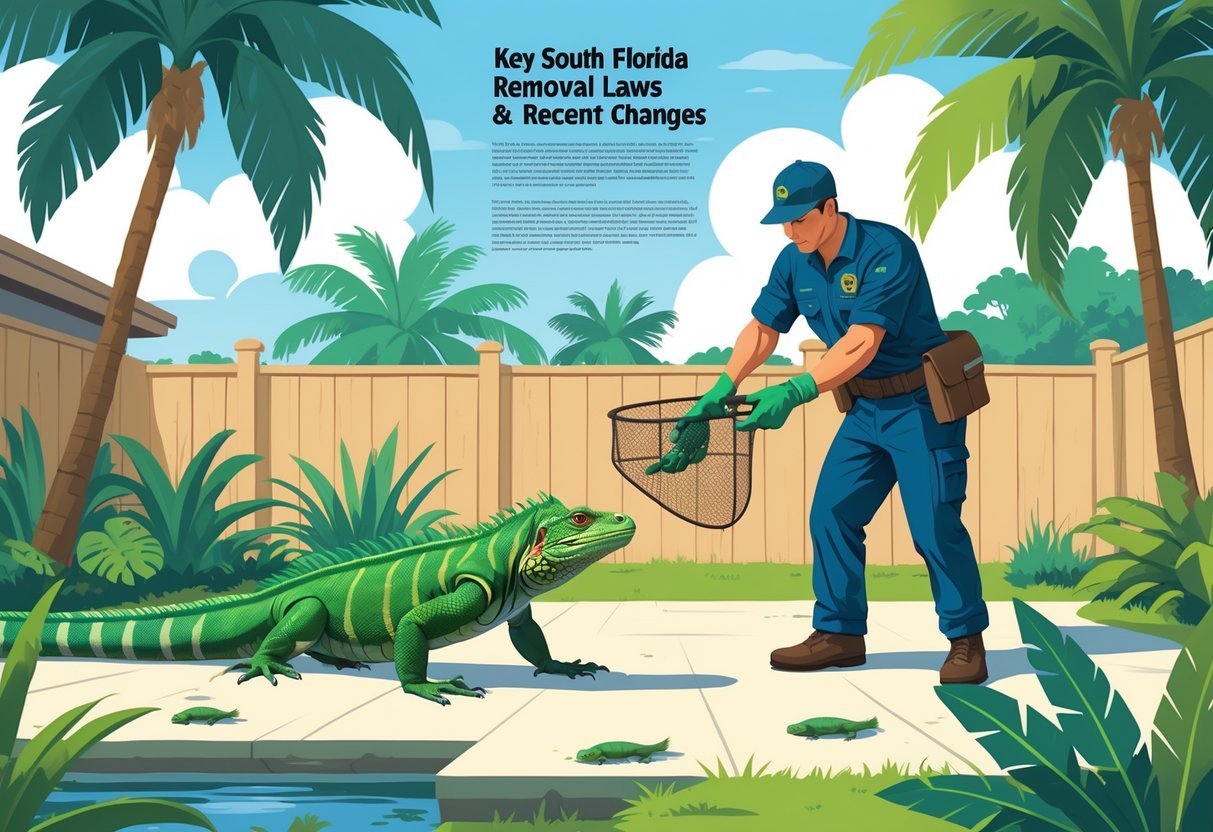
Green iguanas are considered a non-native, high-risk species in Florida; while they can be removed or humanely killed on private property with the landowner’s permission, there are still rules that vary depending on location and activity. Recent changes to FWC rules have expanded who is allowed to collect and sell wild-caught iguanas under permits, as well as added new tagging, transfer, and reporting requirements.
Humane Killing Requirements
If you plan on humanely killing iguanas on private property with the landowner’s permission, it is important to use fast and accepted euthanasia techniques rather than prolonged or injurious methods. It is also important to note that breeding or importing prohibited green iguanas is forbidden by state rules.
In public places or certain situations where permits might potentially be required for removal actions, it is indeed crucial to follow local ordinances and FWC guidance to avoid any violations. Additionally, records shoudl be kept when required by permit conditions; it is also important to avoid methods that could perhaps endanger people, pets or protected wildlife.
Property Owner Permissions
to remove or kill iguanas on private land, you must have the landowner’s consent. Without permission, removal may be considered trespassing or illegal taking if the land does not belong to you.
If you are a renter or contractor, it is important to obtain written permission or documented request from the property owner; having written proof can be helpful in case any questions arise. For public or conservation lands, permission must come from the land manager and should not be done without explicit authorization.
If you plan on trapping iguanas for transfer or sale, it is important to have a specific FWC permit (such as an Eradication and Control permit) and meet caging and biosecurity standards.
Executive Order 23-16 and Commission-Managed Lands
Executive Order 23-16 directed state agencies to prioritize removal of invasive species like green iguanas on state-managed lands; this means that coordinated control efforts and prioritized funding can be found on these properties. Agencies managing state lands may authorize staff or contractors to remove iguanas while adhering to FWC rules and anti-cruelty laws.
If you work on or near Commission-managed lands, expect stricter oversight: eradication programs may require permits, reporting, as well as adherence to PIT-tagging or transfer rules for wild-caught iguanas. Recent updates made by the FWC (effective August 20th, 2025) allow for broader collection and out-of-state sale by permitted holders; though breeding, importation, and also in-state sale of prohibited green iguanas remains illegal.
Licenses, Permits & Professional Iguana Removal
You are allowed to remove green iguanas from private property with the landowner’s permission, but certain activities may require permits or licensed professionals. Professional removal options vary depending on the action: trapping and holding live iguanas, operating as a nuisance wildlife trapper, or running guided hunts and commercial services.
Permits for Trapping and Holding Iguanas
If you capture iguanas alive, it is indeed generally not allowed to relocate them within Florida without authorization. A permit is required to possess live green iguanas for any purpose beyond immediate dispatch on the property where they were taken.
Permits will specify holding conditions, transport rules, and also disposition (such as euthanasia or surrender to an approved facility). Failure to comply can result in fines or seizure of animals.
Before hiring anyone who plans on trapping and retaining iguanas, be sure to check what type of permit they have. Ask for written documentation of their permit and disposal plans before allowing them to trap on your property; if you are authorizing someone else to trap on your property, be sure to keep a copy of their permit.
Licensing for Nuisance Wildlife Trappers
In many counties and municipalities, nuisance wildlife trappers are required to hold specific licenses or registrations in addition to any state permits. Licensed nuisance wildlife trappers have training in humane capture techniques, disease risk reduction (such as Salmonella), as well as property damage mitigation.
If you plan on hiring a trapper, ask for proof of state permits along with local business or nuisance-trapper licenses and insurance. Licensed trappers
Invasive green iguanas can cause significant damage to property and native ecosystems in South Florida. as a result, it is important for commercial operators to have the necessary permits and follow humane-kill standards when removing these animals. In addition, there are restrictions and prohibited activities that must be followed in order to comply with state rules for invasive iguana control.
Permits and Regulations
Commercial operators must obtain additional permits for repeated removals, public events, or transporting multiple animals. it is indeed critically important to verify that guided-hunt companies carry the necessary permits, liability insurance, and follow humane-kill standards.
Prior to participating in any removal activities, it is crucial to ask the operator for copies of their permits and landowner/state authorization. Additionally, evidence of training and humane dispatch protocols should be provided by the operator. A written statement on how captured animals will be disposed of or surrendered should also be requested.
These checks not only protect you legally but also ensure that operators are following state rules for invasive iguana control.
Restrictions and Prohibited Activities
In order to comply with state rules on moving, selling or killing green iguanas in Florida, certain restrictions must be followed.This includes obtaining proper authorization from the state as well as adhering to local regulations on how and where these animals can be removed.
Certain activities such as transporting live wild-caught iguanas within Florida or selling them within the state without proper authorization can result in fines or criminal charges.
Relocation and Transport of Iguanas
If you hold an Eradication Control of Nonnative Species permit with a transfer endorsement from FWC (florida Fish & Wildlife Conservation Commission), you may transfer wild-caught iguanas to permitted sellers.However, it is important to note that you cannot import or breed green iguanas in Florida.
Recordkeeping and reporting are required for transfers and sales of iguanas. This includes reporting to the FWC on a schedule tied to your permit, typically at renewal and semiannually. If you keep wild-caught iguanas for more than 30 days, PIT tagging rules apply for animals over 5″ snout-vent length.
it is important not to move or sell pet iguanas unless you comply with permit, caging, and biosecurity requirements.
Local Firearm and Removal Ordinances
In addition to state regulations, it is indeed crucial to follow local firearm, discharge, and noise ordinances when removing iguanas from your property.Many municipalities and counties have specific regulations regarding shooting within certain zones or require permits for firearm use.
Even if state law allows private property dispatch of iguanas,local rules may limit the methods that can be used. For example, using a firearm or bow might potentially be illegal in residential areas or inside city limits.
Trapping methods may also have restrictions under local codes such as bait or signage limitations. It is indeed critically important to contact your county or city animal control office before attempting removal in order to confirm permitted methods for your neighborhood.
penalties for Illegal Practices
If state or local restrictions are violated during removal activities, there can be serious consequences including administrative fines, permit suspension/cancellation as well as criminal charges depending on the offence committed.
Selling prohibited species in Florida without proper authorization from FWC can result in enforcement actions by the agency. Penalties vary depending on the severity of the violation but can include fines up to felony charges if repeated violations occur.
Humane Methods and Safety Considerations
When removing green iguanas in South Florida, it is important to follow legal, humane, and safety-focused practices. This includes using methods that minimize suffering, protect people and pets, and comply with FWC guidance and local rules.
FWC Guidelines for Euthanasia
The FWC permits landowners and authorized personnel to humanely kill green iguanas on private property year-round. Though, it is indeed crucial to use methods that are considered instantaneous and painless when performed by trained individuals in order to avoid violating anti-cruelty laws.
Acceptable approaches include professional euthanasia performed by licensed wildlife control operators or veterinarians using techniques consistent with veterinary standards. DIY techniques should be avoided as they can result in prolonged suffering which may lead to animal cruelty charges.
If you are unable to perform a humane method safely,it is recommended to contract an experienced nuisance wildlife trapper or pest control firm that follows FWC recommendations.It is also important to keep records of removal actions when required by local ordinances or FWC rules.
Safe Trapping and Handling Techniques
In order to capture iguanas without injury, secure traps should be used along with appropriate bait. These traps should be checked frequently (at least daily) and placed away from high pedestrian traffic areas as well as areas where pets may roam in order reduce stress on the animals being captured.
Captured animals should be handled with heavy gloves and protective eyewear due their ability bite or whip their tails. When handling these animals it is important restrain the tail carefully along with the legs in order prevent injury both yourself as well as the animal being captured.
If you plan on performing humane euthanasia of a captured iguana,it is indeed critically important to transport the animal in a ventilated,escape-proof container to a licensed professional or follow FWC-allowed onsite procedures performed by trained personnel. After handling iguanas,equipment should be sanitized and hands should be washed in order to reduce the risk of Salmonella transmission.
It is also recommended to document trap locations,times checked and condition of animals. If you hire a contractor for iguana control, it is important to verify their certifications, insurance and familiarity with FWC rules.
Disposal of Dead iguanas and Local Regulations
The disposal of dead iguanas must comply with local public-health and waste-management ordinances. Common legal options include burial on private property (where allowed), double-bagging and placing carcasses in regular trash according to county rules or using designated carcass disposal services.
Carcasses should never be left in public areas or discarded into waterways. If a commercial wildlife service performed the removal, documentation should be requested that shows proper disposal consistent with Florida law as well as local regulations. Records should also be kept regarding disposal dates along with method used; photos may also need to be taken if required for compliance purposes or for homeowner association reporting.
Preventative Measures and Habitat Modification
In order reduce infestations of green iguanas on your property it is indeed critically important focus on exclusion methods along with habitat alteration through routine maintenance practices.
Deterring Iguanas from Properties
To prevent green iguanas from being attracted onto your property it is crucial remove food sources such as ripe fruit promptly along with securing compost bins using tight lids. vegetable beds can also be covered using netting while pet food should not left outside where these animals can access it.
In addition trimming low-hanging branches and vines that provide climbing paths to roofs, fences, and pools can also help deter iguanas. Visual and physical deterrents can also be used together such as motion-activated sprinklers or stringing bird netting or plastic garden mesh along fences.
While there are repellents sold for reptiles, there is limited evidence supporting their effectiveness.If you do decide to use a product of this nature it is important to test it on a small area first while following the label instructions.
If iguanas continue to persist on your property,consider hiring professional removal services or reporting the issue to local FWC guidance for permitted removals. It is important not relocate captured iguanas as this is illegal and only spreads infestations further.
Landscape and Structural Adjustments
In order reduce burrowing opportunities for green iguanas it is recommended alter ground conditions by filling or capping known burrows with compacted gravel along with concrete collars where appropriate.
Maintaining a 2-foot cleared zone along foundations and under patios can also discourage digging while exposing burrows for inspection purposes. When choosing plants for your property it may be beneficial select species that are less attractive to iguanas in order reduce their presence on your property.
Replacing fruit-bearing palms along with low-slung edible shrubs with native non-fruiting species or tall ornamental grasses can help prevent these animals from being attracted onto your property. Young trees should also be protected using tree guards while root barriers around garden beds can limit access by these animals.
BarriersCreate a Seasonal Inspection Routine to Control Iguana Populations
Iguanas are a common sight in Florida, but their presence can cause problems for homeowners and the environment. These invasive reptiles can damage property, spread diseases, and compete with native species for resources. To effectively manage iguana populations, it is indeed critically important to implement a seasonal inspection routine that includes monitoring and reporting any sightings or signs of iguanas.
Weekly Inspections During Warmer Months
During the warmer months when iguanas are most active, it is indeed crucial to conduct weekly inspections of your property. Look for fresh tracks, droppings, shed skin, and new burrows as these are all signs of iguana activity. It is also helpful to take photographs and mark locations where you have spotted these reptiles. This will allow you to monitor trends over time and track any changes in their behaviour or population size.
Collaborate with Neighbors
Iguanas do not stay within one property; they can easily move from one yard to another. Therefore, it is important to coordinate with your neighbors to reduce habitat suitability for these creatures on a neighborhood-wide level. By working together,you can create a more effective barrier against iguanas entering your properties.
Addressing Problematic yards
Even if you have successfully managed the iguana population on your own property, there may be other yards in your neighborhood that provide ideal habitats for them. Fruit trees or unmaintained pools are particularly attractive to iguanas and can undermine all of your efforts if left unaddressed. It is important to share information about legal removal options and community removal programs with neighbors who may be struggling with this issue.
Keep records of Control Measures
It is essential to keep records of any control measures taken on your property and also contacts for licensed removal professionals and local wildlife authorities. This will help you stay organized and informed about the steps you have taken to manage iguanas on your property. In case of any issues or concerns, these records will also serve as a reference for future actions.
Understanding Ownership and exotic Species Regulations
in Florida, owning a pet iguana is only allowed under specific conditions and with proper documentation. If you owned a pet iguana before the state’s rule change that listed green iguanas as prohibited, you must register or hold required documentation to keep it legally as a personal pet. It is indeed critically important to note that releasing captive iguanas into the wild is illegal and can worsen invasive populations.
Rules for Keeping Pet Iguanas
If you are planning to keep an iguana as a pet in Florida, it is indeed crucial to understand the rules and regulations surrounding their ownership.Private-property removal and humane killing are allowed for feral iguanas, but this does not replace owner responsibilities for captive animals. It is important to check local ordinances and HOA rules before bringing an exotic pet into your home.
Exotic Pet Amnesty Program Overview
Florida’s Exotic Pet amnesty Program offers an option for owners who can no longer care for their pets without facing penalties. This program accepts surrendered nonnative pets without consequences, nonetheless of prior legality. Surrendered animals are evaluated, and adoptable ones may be rehomed to prequalified owners through participating agencies.
Selling and Eating Iguanas in Florida
The sale of live green iguanas within Florida has been restricted at times due to changes in state laws after 2020 and 2024 updates. Therefore, it is important to confirm current regulations before attempting any sale or trade within the state or across state lines.
Consuming iguana meat (also known as “iguana stew” or colloquially referred to as “chicken of the trees”) might potentially be tolerated in some parts of Florida if obtained lawfully. However, it is important to follow public health and food-safety guidelines when preparing iguana meat and to verify local ordinances. Some municipalities may have restrictions on the possession or sale of invasive species meat, so it is indeed always best to consult with FWC or local health authorities before consuming iguana meat.
implementing a seasonal inspection routine and staying informed about regulations and removal options are key in effectively managing iguana populations in florida. By working together as a community, we can reduce the impact of these invasive reptiles on our environment and protect native wildlife.

