
if you have been dealing with iguanas digging, eating, or leaving droppings in your South Florida yard, there are practical and humane steps you can take to stop the damage. By targeting food sources, shelter, and access points, you can make your property unattractive to these reptiles.
Seal hiding spots, remove favorite plants and food sources, and install simple barriers and deterrents to discourage iguanas from visiting your yard.

in this article, we will discuss how iguanas behave in South Florida, why it is crucial to control them for both landscaping purposes and health reasons, as well as effective methods for keeping them away from your property.
Understanding Iguanas in South florida
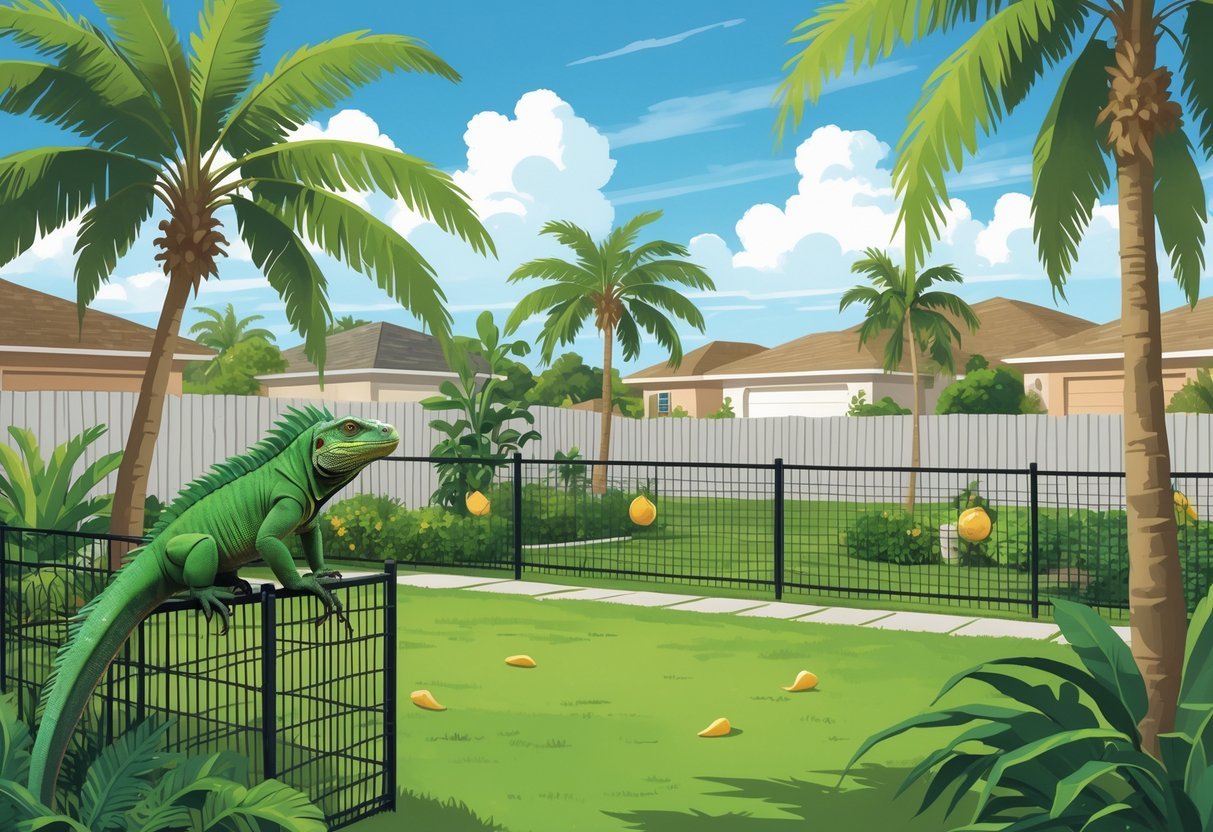
Green iguanas (Iguana iguana) have established breeding populations in South Florida and thrive in warm suburban landscapes. These large plant-eating lizards are known for their ability to dig burrows and climb structures for shelter.
The Invasion of Green iguanas
Although green iguanas are not native to Florida,they have been reproducing freely since the 1960s. They can now be found across Miami-Dade, Broward, and neighboring counties, with thousands of sightings reported in recent years. Due to their ability to reproduce rapidly in warm winters, populations can quickly grow after mild seasons.
Female iguanas lay multiple clutches of eggs in soft soil, making areas with loose landscaping or mulch prime nesting sites. It is important to note that some municipalities allow legal removal of iguanas while others restrict trapping or relocation. Be sure to check local rules and regulations before taking any action.
Habits and Behavior
Green iguanas are diurnal creatures and are most active during daylight hours, especially mid-morning and late afternoon when they bask in the sun. They primarily feed on leaves, fruits, and flowers from gardens and ornamental plants.
To reach food sources or find warmth,iguanas will climb fences,trees,gutters or dig burrows for shelter. You may notice droppings near their favorite feeding spots as well as burrow entrances in soft soil or under patios.
It is important to avoid approaching or handling iguanas without proper training as they may freeze when cornered or drop from branches as a defense mechanism.
Risks Associated with Iguanas
Iguanas can cause damage to landscaping by eating ornamental plants such as vegetables and young trees. this often results in stripped leaves or severed stems which can lower yields and require frequent replanting.
Burrowing also poses a threat as it undermines patios, seawalls,and foundations which can lead to settling issues along with creating trip hazards. Additionally,the droppings left behind by these reptiles can stain hard surfacesand perhaps carry bacteria that could pose health risks to homeowners with outdoor living spaces.
While aggressive encounters are rare, it is important to prioritize exclusion, habitat modification, and legal removal methods to reduce these risks around your property.
The Importance of Iguana control
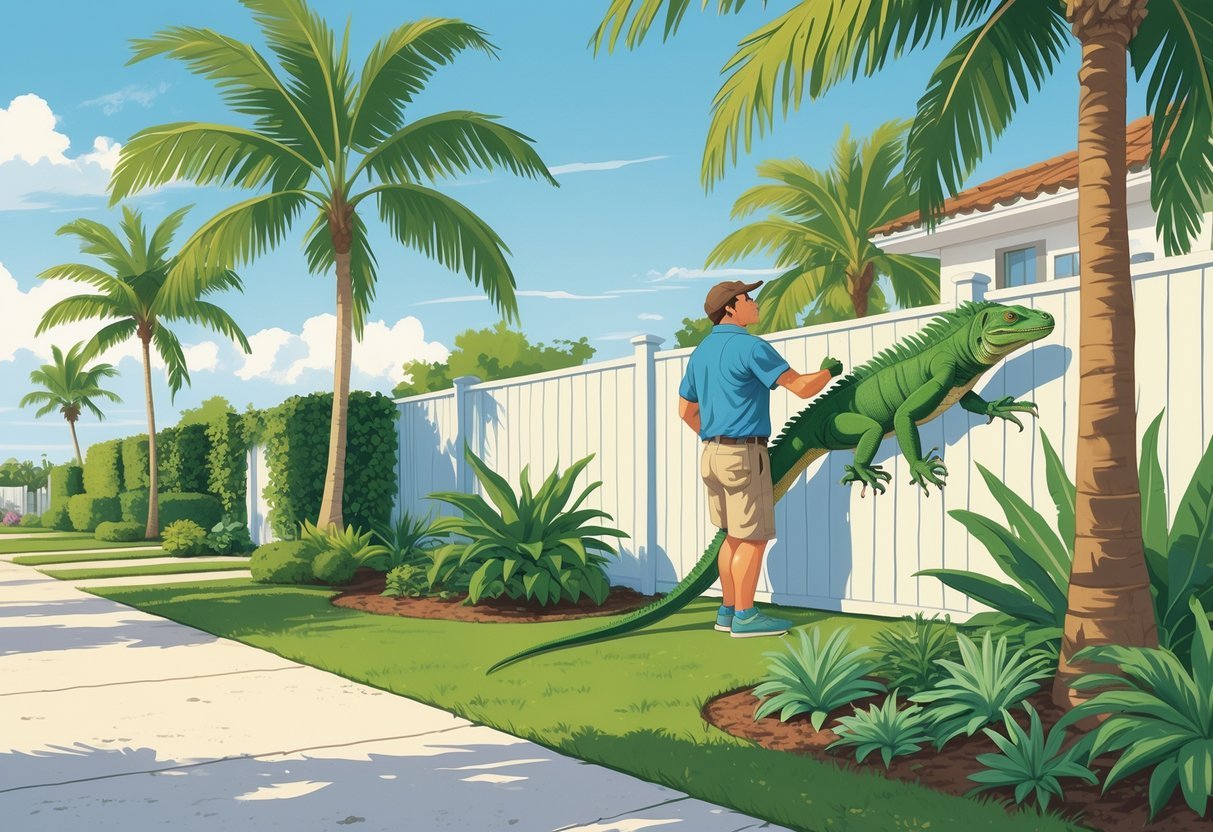
Iguanas can cause damage to plants, dig extensive burrows,and create health risks around your home. By controlling them,you can protect your landscaping, foundations,and the people who use your yard.
Threats to Gardens and Landscaping
Iguanas have a wide range of food sources including tender greens,tomatoes,melons,hibiscus,and papaya which makes them common targets for these reptiles. If you rely on edible plants or ornamentals,you may notice stripped leaves,chewed fruit,and ruined seedlings which can lower yields and require frequent replanting.
Along with eating plants, iguanas also defecate in planting beds and around patios which can contaminate soiland make outdoor spaces unpleasantto use.To prevent iguanas from damaging sensitive beds,you can use physical barriers such as wire netting or cages along with removing any plants they favor.You may also consider replacing attractive species with less palatable options in order to keep iguanas away long term.
Structural Damage from Burrowing
Iguanas dig burrows for nestingand shelter often under patios, seawalls,sidewalks,and foundations.These tunnels can undermine soil compaction and lead to settling, cracks in concrete,and gaps under fences.Even a few active burrows near a structure can increase the risk of localized collapse or costly repair work.
To prevent burrowing, it is important to inspect soft soil areas near hardscapes and fill holes promptly with compacted gravel or soil. Burying barriers at least 12 inches deep and sealing gaps under fences can also help prevent new burrows and make iguana control more effective.
Health and Safety Concerns
Iguana droppings can carry Salmonellaand other bacteria which pose a risk to children,pets,and anyone who gardens barefoot. Stepping in droppings or handling contaminated soil raises infection risk.Additionally,large iguanas on roofs,ledges,or pools can fall when cold-stunned creating hazards for people below along with leaving behind messy cleanup.To ensure safety,it is important to avoid direct handling of iguanasand keep food and pet dishes sealed.Motion-activated sprinklers,reflective deterrents,and habitat modification are all effective methods for reducing visits from iguanas without resortingto hazardous chemicals or injurious methods.
Critical Steps for Keeping Iguanas Out
In order to make your yard unattractive, exposed,and difficultto access by iguanas,you should focus on removing food sources as well as shelter while trimming coverand choosing plants that these reptiles tend to avoid.
remove Attractants from Your Yard
the first step in keeping iguanas away is removing all edibleand moisture sources that may draw them into your yard. This includes picking up fallen fruit daily (mangoes,papayas,citrus),keeping vegetable gardens fenced off,and storing compost in sealed containersor an enclosed bin. Additionally,avoid leaving pet food or birdseed outdoors overnight and clean up any spilled seed immediately. be sure to secure trash with tight lids and place bins on hard surfaces away from soft soil where iguanas may burrow.
Eliminating standing water is also critically important so be sure to repair leaky hoses,cover drains,and tip water-filled containers.
By removing these attractants,you can reduce the chances of iguanas visiting your yard in the first place.
Tidy Up and Limit Hiding Spots
To make your yard less appealingto iguanas,it is indeed critically important to open up sightlinesand remove dense cover where they may hide.Trim shrubs and prune tree branches so there is at least a 2-foot gap between plantingsand fences,walls,or roofs.Remove piles of debris,wood,or leaf litter promptly as these create shady refuges.Blocking burrowing by compacting soiland placing 12-inch-deep gravel,cut rock,or concrete beneath patiosand along foundation edges can also help prevent new burrows.Inspect fences and under-deck areas for gaps;seal openings with hardware cloth or concrete.Motion-activated sprinklersand luminous lights are also effective in making exposed yards feel riskyto iguanas which helps deter them from returning.
Plant Selection for Iguana Prevention
Choosing plants that iguanas find unappealingis another effective method for keeping them out of your yard. You can use tough barrier plants such as cacti or spiny shrubs around vulnerable areas inIguanas are a common sight in many parts of Florida, but their presence can cause problems for homeowners and gardeners. These large, herbivorous lizards can damage plants, dig burrows, and even carry diseases.If you’re dealing with an iguana problem on your property, it’s important to take action to prevent further damage and protect your plants. In this article, we’ll discuss effective methods for keeping iguanas out of your yard while also ensuring the safety and well-being of these creatures.
one key strategy for preventing iguanas from entering your yard is to carefully choose the plants you have in your garden. Iguanas are known to be attracted to certain types of vegetation,such as lettuce,collards,hibiscus,papaya,and other soft-leaved ornamentals. To discourage them from feeding on these plants, consider replacing them with less palatable options like agave or bromeliads.In addition to choosing the right plants for your garden beds and borders,it’s also important to create physical barriers that will make it arduous for iguanas to access your property. This can include using spiky or thick-leafed border plants along fences and garden beds or installing a fence at least 5-6 feet tall with smooth surfaces that iguanas cannot grip onto.
When installing a fence specifically designed to keep out iguanas, there are several key factors to keep in mind. First off is the height – make sure it is at least 5-6 feet tall so that they cannot easily climb over it. Additionally,the material used should be smooth so that they cannot grip onto it with their claws – vinyl or metal panels work well for this purpose.
To further deter climbing attempts by these lizards,you may want add an outward-angled apron made of hardware cloth or concrete at the base of the fence.This will prevent them from digging underneath it. It’s also critically important to make sure there are no gaps or openings in the fence, as iguanas can easily squeeze through small spaces.
In addition to physical barriers, you can also protect your plants and trees by using mesh or wraps. This involves enclosing low beds and young trees with 1/2-inch galvanized hardware cloth or poultry netting to prevent iguanas from nibbling on them. You can also wrap trunks and lower limbs of fruit trees with smooth plastic tree guards or 1/4-inch polycarbonate sheathing to stop climbing.
Another effective strategy for keeping iguanas out of your yard is to use targeted repellents, motion devices, and sensory distractions. These products work by making your yard unattractive and unpredictable for iguanas, discouraging them from returning.
When choosing a repellent specifically designed for iguanas, look for ingredients that are known to be effective against reptiles such as cayenne-based or strong-smelling botanical oils. These can be applied around garden beds, the base of fruit trees,and burrow entrances.
Motion-activated sprinklers and lights are another useful tool in deterring these lizards from entering your property. The sudden spray of water or illumination startles them and makes them think twice about returning. Just make sure to position these devices carefully so that they cover known feeding zones,burrow entrances,and low branches where iguanas may climb.
In addition to physical barriers,deterrents,and exclusion methods,you may also want consider humane trapping techniques if you have a notably persistent problem with iguanas on your property.However,it’s important to note that Florida has specific rules regarding the handling of these invasive creatures.You must follow Florida Fish and Wildlife Conservation commission guidelines when attempting DIY trapping techniques.If you’re unsure how to set traps safely,it’s best call a professional wildlife removal service experienced in humane iguana removal.
there are several effective methods for keeping iguanas out of your yard while also ensuring their safety and well-being. By carefully choosing the plants in your garden, creating physical barriers, using targeted repellents and motion devices,and following legal guidelines for humane trapping,you can successfully prevent these lizards from causing damage to your property. Remember to always prioritize safety and follow proper procedures when dealing with any wildlife on your property.Guidelines for the Capture, Euthanasia, and Disposal of Iguanas: Ensuring Compliance with FWC Regulations
The Florida Fish and Wildlife Conservation Commission (FWC) has established strict guidelines for the capture, euthanasia, and disposal of iguanas. These regulations are in place to protect both the welfare of these animals and the safety of humans. It is indeed critically important to adhere to these guidelines in order to avoid any legal repercussions.
Capture Methods
When attempting to remove iguanas from your property, it is indeed crucial to use humane methods that do not cause unnecessary suffering. The use of toxicants or illegal snares is strictly prohibited by FWC regulations. Additionally, relocating live iguanas to other counties or releasing them into the wild can spread their population and violate state rules.
Euthanasia Procedures
In cases where euthanasia is necessary,it is imperative that only approved methods are used. This includes methods approved by FWC or a licensed wildlife control operator. It is also important to keep records of trapping activity if repeated removals are being conducted as this documentation may be requested by authorities.
When To Seek Professional Help
If you find yourself dealing with a large number of iguanas on your property or if traps fail to catch them, it might potentially be time to seek help from a licensed wildlife removal company. Professionals have the expertise and equipment needed for safe and effective removals. they also ensure compliance with state regulations regarding trapping and euthanasia procedures.
Choosing A Wildlife Removal Company
When hiring a wildlife removal company, it is essential that they follow all FWC rules and regulations regarding iguana control. This includes avoiding the use of poisons and also providing proof of licensing and insurance upon request.
It is indeed also critically important to inquire about their trapping methods and frequency of checks during removals. Additionally, ask about any aftercare services they offer such as exclusion work or habitat modification to prevent future infestations.
Safety Concerns
If you have pets or small children, it is recommended to hire professionals for iguana removal. This is especially important if you have any health concerns about handling reptiles. Professionals are trained in safe handling techniques and can ensure the safety of both humans and animals during the removal process.
it is crucial to follow FWC guidelines when dealing with iguanas on your property. By using humane methods of capture, adhering to regulations regarding euthanasia, and seeking professional help when needed, we can ensure the well-being of these animals while also maintaining a safe environment for ourselves and our communities.


This is so helpful, iguanas have been such a nuisance in my yard!