
Living in Florida means encountering snakes on a regular basis. However, this does not mean that you have to tolerate them in your chicken coop. By taking simple and effective measures, you can keep snakes away from your flock and protect their safety.
Seal Any Gaps and Remove Hiding Spots

The first step to keeping snakes out of your chicken coop is to seal any gaps or openings that they could use as entry points. This includes fixing loose hardware cloth,sealing vents and windows with 1/2 inch hardware cloth,and installing door sweeps to close any gaps under doors.
Along with sealing off potential entry points, it is important to remove any hiding spots near the coop such as piles of wood or dense brush. Keep the ground tidy and well-lit to reduce daytime cover for snakes.
Why Snakes are Attracted to Chicken Coops in Florida

Snakes are attracted to coops because they provide easy access to food, water, and shelter. In warm climates like Florida’s where vegetation is dense, coops become even more inviting for these reptiles.
Potential Food Sources for Snakes
The primary attractant for snakes is rodents. Mice and rats are drawn to spilled feed, open grit, and unsecured feed bins.Where there are rodents, snakes will follow as they provide an easy and calorie-rich meal.
Along with rodents, snakes may also target bird eggs, chicks, and nestling poultry. It is indeed critically important to regularly collect eggs and use rodent baiting or traps placed safely away from chickens to reduce the abundance of prey for snakes.
potential Shelter and Hiding Places
Snakes seek cool and concealed shelters during hot weather or wet-season storms. Piles of wood,stacked building materials,dense brush,tall grasses near the coop can all serve as ideal hiding spots for these reptiles.
To prevent this from happening in your coop area, clear vegetation within at least 10-15 feet of the coop. Stack firewood away from the coop on a raised rack and seal any gaps with 1/4-1/2 inch hardware cloth.
Types of Snakes Found Near Florida Chicken Coops
Florida is home to a variety of nonvenomous and venomous snake species that may visit your chicken coop.Common nonvenomous species include eastern kingsnakes and rat snakes which often hunt rodents and eggs but can still harm chicks. Venomous species such as copperheads, cottonmouths (water moccasins), or rattlesnakes may also be present in some regions.
If you spot a snake near your coop it is important to note its size, head shape,and location.If you suspect it may be venomous it is best to keep your distance and call professional wildlife removal services.
Sealing Your Coop To Keep Snakes Out
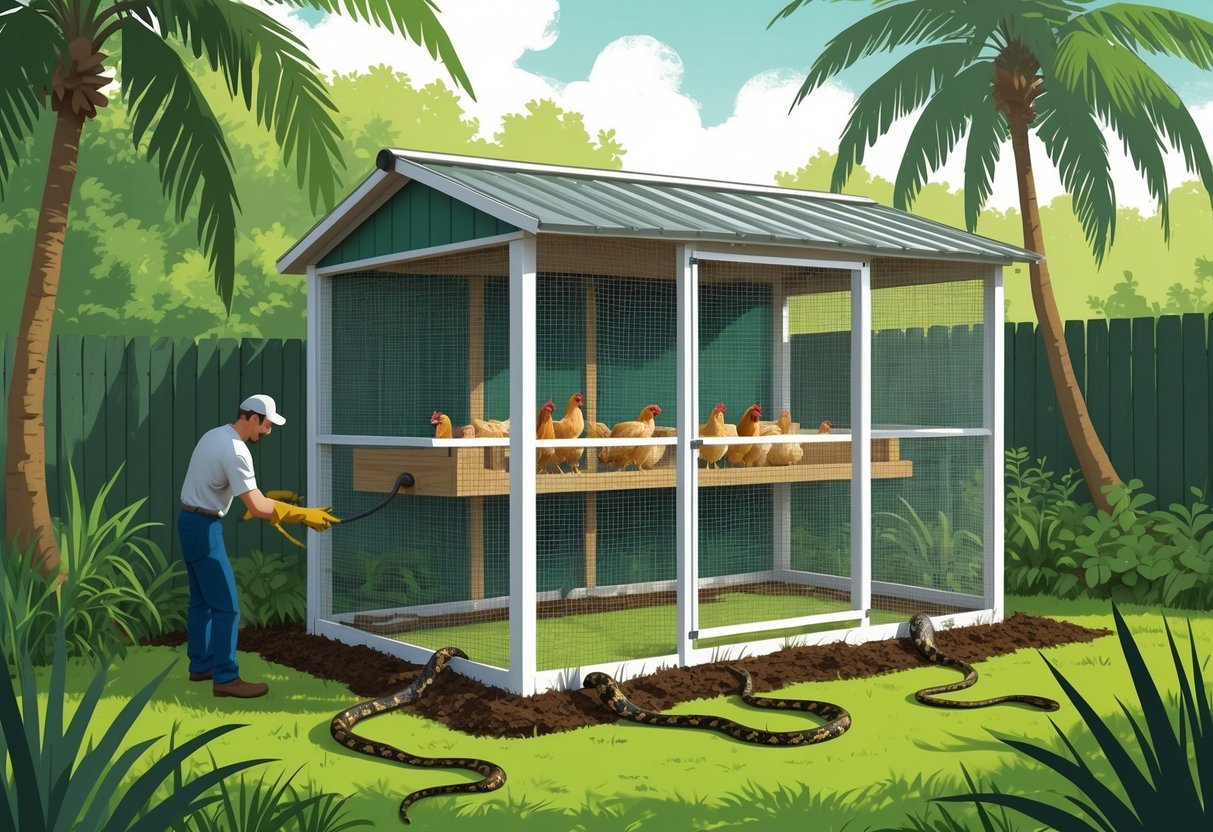
The key to keeping snakes out of your coop is to seal off any potential entry points. This includes installing sturdy 1/2 inch hardware cloth and reinforcing doors, vents, and windows so that snakes cannot squeeze through or climb into the coop.
Inspecting And Sealing Entry Points
To ensure that your coop is snake-proof, it is important to thoroughly inspect the perimeter for any gaps or openings as small as a thumb (about 3/4 inch) or smaller. These can be found at joint seams, where siding meets the foundation, around pipe penetrations, and under roosts.
Mark every hole or seam you find and use silicone caulk for hairline cracks and expanding foam for wider gaps up to 2 inches. For larger gaps over 2 inches in size, cut scrap wood or metal flashing to fit and seal edges with caulk before attaching hardware cloth for extra strength.
Bury hardware cloth at least 12 inches around the base of your coop where soil is soft. You can also install an outward-facing apron of hardware cloth that is 12-18 inches wide to prevent snakes from digging beneath walls or fences.
Using Sturdy Hardware Cloth
When sealing off openings in your coop it is important to use welded 1/2 inch hardware cloth (not chicken wire) as this will stop most snakes while remaining stiff enough to resist bending or chewing. Cut pieces of hardware cloth so that they overlap by 3-4 inches at seams and fasten with galvanized screws and washers or hog rings every 6-8 inches. Reinforce edges with treated lumber to prevent gaps where the cloth meets the frame.
For buried runs or aprons, use strips of hardware cloth that are 18-24 inches wide and bend the bottom edge into an L-shape to lay flat under soil. It is important to regularly check for any rusted or damaged sections and replace them instantly.Stainless steel or galvanized hardware cloth will last longest in Florida’s humid climate.
Securing Doors, vents, And Windows
To ensure that snakes cannot enter through doors, vents, or windows it is indeed critically important to replace any loose or worn door sweeps with metal or rubber sweeps that close gaps under doors. You can also fit doors with a 1/2 inch hardware cloth panel inset and secure it with carriage bolts through the frame.
Cover vents and windows with cut-to-fit 1/2 inch hardware cloth attached on the exterior using screws and washers. add interior trim to prevent animals from pushing the mesh inward. Use keyed or padlockable latches that cannot be nudged open by animals.
For sliding or drop-down windows, install overlapping metal flashing routed into the frame so there are no vertical slots larger than 1/2 inch.
Natural Deterrents to Keep Snakes Away
Along with sealing off your coop, you can also use natural deterrents to reduce snake visits in Florida’s climate. This includes using barriers such as plants around your coop as well as applying safe repellents that won’t harm chickens or pets.
Applying Natural Snake Repellents
You can use granular sulfur or commercially labeled natural snake repellents around the perimeter of your coop in a 2-3 foot band where snakes may approach. be sure to reapply after heavy rain and follow product label directions to protect chickens and garden plants.
It is important to place treated material outside the coop foundation, not inside nesting boxes or feeders.For a non-chemical option, you can also spread coarse cedar mulch or crushed limestone which create surfaces that snakes tend to avoid and reduce rodent habitat.
Maintain a 2-3 inch clear zone against the coop walls so that the repellent strip stays visible and dry. It is also important to regularly check for any gaps where the repellent may have been displaced and reseal these areas as needed.
Choosing Snake Repellent Plants
You can also use hardy, low-groundcover plants around your coop that emit scents that snakes dislike. Good choices in Florida include lemongrass (Cymbopogon), marigolds (Tagetes), and wormwood (Artemisia) placed 2-4 feet from the coop wall.
Arrange these plants in a continuous bed at least 2 feet wide so that snakes encounter them before reaching the structure. Avoid planting dense shrubs near your coop as they can provide hiding spots for snakes.
by taking simple measures such as sealing off entry points, removing hiding spots, using natural deterrents, and regularly maintaining your coop you can effectively keep snakes away from your flock in Florida’s climate. Remember to always prioritize safe methods over harmful onesRewritten Article:
preventing Snakes and Rodents in Your Chicken Coop
Keeping your chicken coop free from snakes and rodents is essential for the health and safety of your birds.These pests can not only harm your chickens, but also attract other predators to your coop.Here are some tips to help you keep these unwanted visitors away.
Creating a Less Attractive Surroundings
To discourage snakes and rodents from entering your chicken coop,it’s critically important to make the environment less appealing to them. This includes removing any potential hiding spots such as brush piles, tall grass, or stored wood near the coop. It’s also important to keep the area around the coop clean and well-maintained by regularly trimming beds and removing leaf litter.Using Natural Methods
Essential oils like clove or cinnamon can be diluted with water and sprayed around the perimeter of your coop on a weekly basis. This will help deter snakes without harming your chickens or their eggs. other methods include motion-activated sprinklers or solar vibration devices that discourage both snakes and their prey.
Proper Storage of Feed and Water
Rodents are attracted to spilled feed, so it’s important to store all poultry feed in rodent-proof metal bins with tight-fitting lids. Keep these bins elevated off the ground on metal stands if possible. It’s also crucial to clean up any spilled feed immediately.
Maintaining a Clean Perimeter
Inspecting for entry points is key in preventing both snakes and rodents from entering your chicken coop. Seal any gaps under doors or around vents with 1/4-inch hardware cloth or metal flashing. Regularly check for new burrows, shed skins, or rodent runs along the perimeter of your coop.
Controlling Rodents
reducing food sources for rodents is an effective way to prevent them from being attracted to your chicken coop.This includes clearing away birdseed, fallen fruit, compost heaps, as well as keeping grass mowed and firewood stacked on pallets. Trapping or using tamper-resistant bait stations can also help reduce rodent numbers.Additional Preventive Strategies
Regular inspections of your coop and perimeter are crucial in keeping snakes and rodents away. Installing physical barriers such as 1/4-inch hardware cloth on all openings, as well as maintaining proper lighting at night, can also help deter these pests. It’s important to monitor the effectiveness of any deterrent methods used and make adjustments accordingly.
by following these tips and regularly maintaining your chicken coop, you can prevent snakes and rodents from becoming a problem for your flock. Remember to always prioritize the health and safety of your chickens by creating a clean and secure environment for them to thrive in.How to Effectively Deter Nocturnal snakes: A Comprehensive Guide
Snakes are captivating creatures that play an important role in our ecosystem. Though, when they start invading our homes and gardens, they can become a nuisance and even pose a threat to our safety. While there are many methods for snake control, deterring them from entering your property is the most humane and effective approach. In this article, we will discuss how you can deter nocturnal snakes from your property while keeping their well-being in mind.Understand Snake Behavior
Before we dive into the various methods of deterring snakes,it is crucial to understand their behavior. Snakes are cold-blooded creatures that rely on external sources of heat to regulate their body temperature. This means that during hot summer days, they will seek shelter in cool and damp areas such as under rocks or inside buildings.At night, when temperatures drop substantially, snakes become more active as they search for warmth. This is why nocturnal snakes are more likely to enter human habitats during this time. By understanding this behavior pattern, you can better strategize your snake deterrent methods.Document Patterns and Reevaluate Your Strategy Seasonally
Snake activity varies depending on the season. During colder months or droughts when food sources are scarce, snakes may be more active at night as they search for prey. Conversely, during breeding season in spring and summer months, female snakes might potentially be more aggressive in defending their nests.
it is essential to document any patterns of snake activity on your property throughout the year and reevaluate your strategy accordingly. Such as, if you notice an increase in snake sightings during breeding season near a specific area of your property, focus on implementing deterrent methods around that area.
Make Your Property Less Attractive to Snakes
Snakes need shelter and food sources just like any other animal. By making your property less appealing to them, you can effectively deter them from entering. Keep your lawn and garden well-maintained, as tall grass and cluttered areas provide hiding spots for snakes.
Seal any gaps or cracks in your home’s foundation, walls, and windows to prevent snakes from entering. Also, keep food sources such as bird feeders away from the house, as they can attract rodents that are a common food source for snakes.
Use Natural Deterrents
There are several natural deterrents that you can use to repel nocturnal snakes. One of the most effective methods is using essential oils with strong scents such as cinnamon, clove, or eucalyptus. These scents are unpleasant to snakes and can help keep them away.
You can also plant certain herbs like lemongrass or garlic around your property to create a barrier against snakes. Additionally, installing motion-activated lights around your property can startle and deter nocturnal snakes.
seek Professional Help
if you have a severe snake problem on your property or live in an area with venomous species of snakes, it is best to seek professional help. A wildlife expert will be able to assess the situation and provide safe and humane solutions for deterring nocturnal snakes.
deterring nocturnal snakes requires understanding their behavior patterns and making your property less attractive to them by removing potential shelter and food sources. Using natural deterrents like essential oils or seeking professional help may also be necessary in some cases. By following these tips,you can effectively deter nocturnal snakes while keeping their well-being in mind.


Thanks for the helpful tips, definitely going to try these out to protect my chickens!