
You will encounter venomous snakes across South Florida’s wetlands, hammocks, and even near suburban edges. Knowing which species live here and how to tell them apart keeps you safe.
Six native venomous snakes live in Florida, and several of those—like cottonmouths, pygmy rattlesnakes, eastern diamondbacks, and coral snakes—occur in South Florida. Learning their appearance and behavior lets you avoid risky encounters.
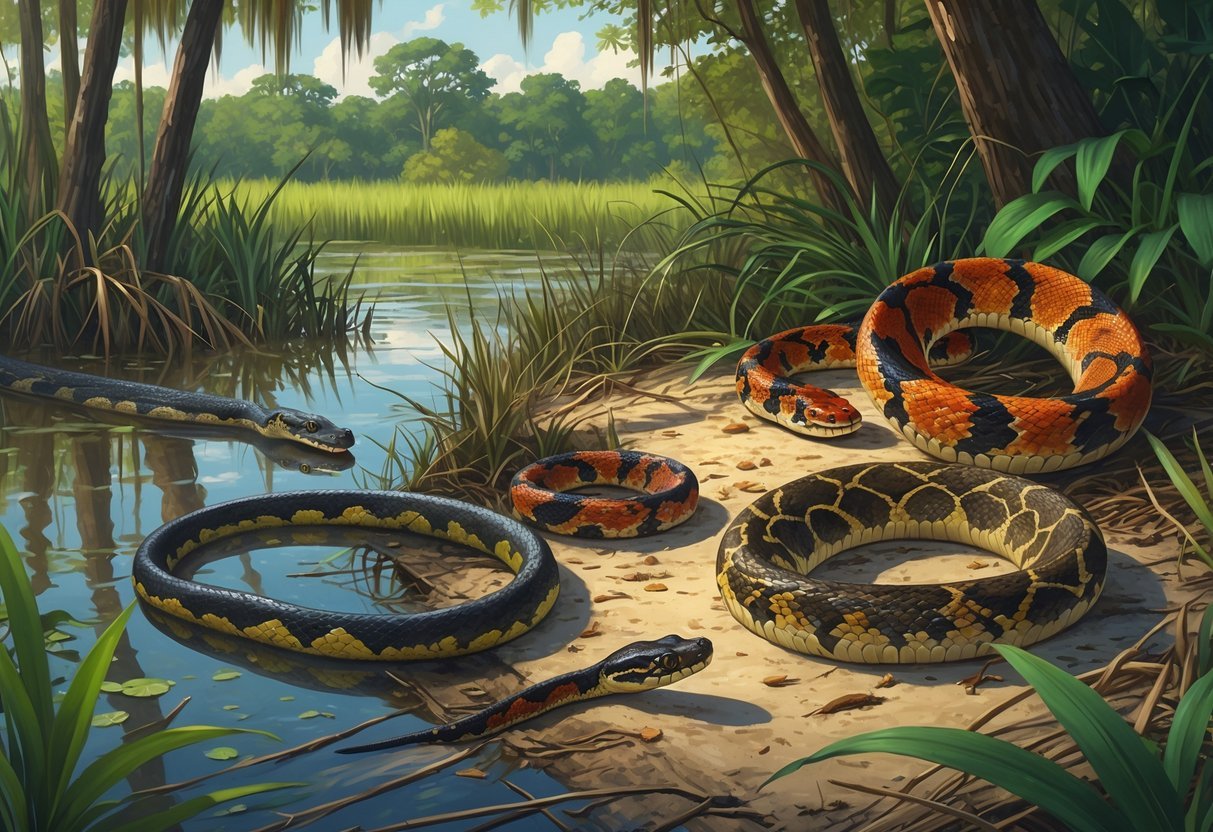
As you move through this guide, you’ll get clear comparisons between pit vipers and elapids. You’ll also find tips to distinguish harmless look‑alikes, and practical safety and first‑aid steps to follow after a bite.
Expect concise species profiles, notes on less common or non‑native venomous snakes that sometimes turn up, and straightforward advice you can use on trails, in yards, or when managing wildlife around your home.
Overview of Venomous Snakes in South Florida
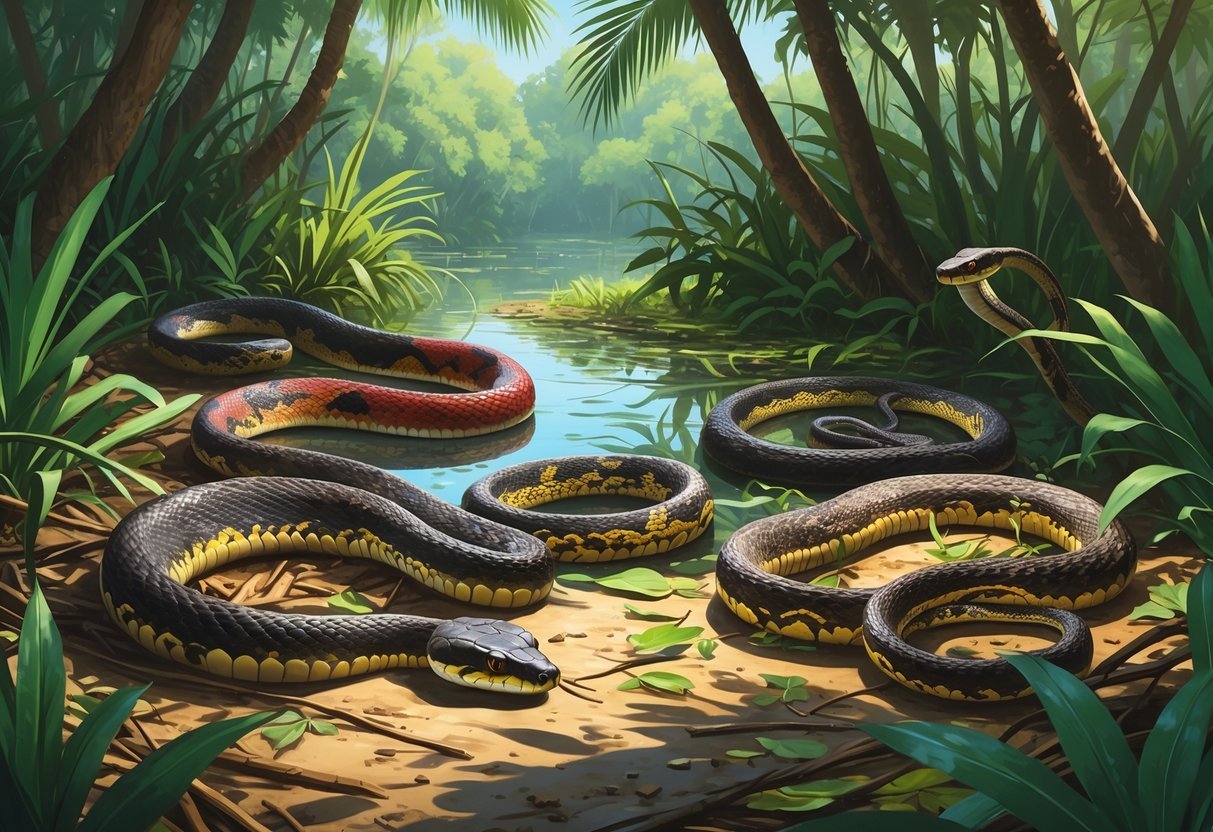
You will most often encounter six native venomous species in Florida, and four of them are regularly found in South Florida. These snakes vary in appearance, venom type, and preferred habitats.
Recognizing key features and where they live helps you avoid dangerous encounters.
Key Characteristics of Venomous Snakes
Venomous snakes in Florida include rattlesnakes (pit vipers), cottonmouths, copperheads, and coral snakes. Pit vipers—like the eastern diamondback and pygmy rattlesnake—have heat-sensing pits between the eye and nostril, triangular heads, and vertical pupils.
Coral snakes (an elapid) lack pits, have round pupils, and possess neurotoxic venom. Pit viper venom is largely hemotoxic (tissue and blood vessel damage), while coral snake venom is neurotoxic (can cause paralysis).
Many venomous species give warning cues: rattlesnake tail-rattling, cottonmouth open-mouth display, and coral snakes’ distinct red-yellow-black banding. Never handle any snake unless you are trained and equipped.
Common Habitats and Ranges
In South Florida you will find eastern diamondback rattlesnakes in pine flats and dry scrub. Pygmy rattlesnakes are found in hammocks, pinewoods, and near wetlands.
Cottonmouths (water moccasins) inhabit swamps, canals, and marsh edges. Coral snakes live in leaf litter, sandy soils, and under logs.
Timber rattlesnakes and copperheads occur mainly north of the region and are uncommon in South Florida. Snakes use microhabitats seasonally: seek shade and burrows in midday heat, and are more active along edges and animal trails at dawn or dusk.
You should check your yard, woodpiles, and storm drains when working outdoors. Keep vegetation trimmed to reduce suitable cover.
Identification Tips for Residents
Look for these practical ID markers: triangular head and single, elliptical pupil suggests a pit viper. Presence of facial pits confirms a heat-sensing pit viper.
Rattles on the tail identify rattlesnakes, though pygmy rattlesnakes may have small, hard-to-hear rattles. Cottonmouths have blocky heads and often sit near water; they gape white inside the mouth when threatened.
For coral snakes, use color pattern cautiously: in Florida, red touching yellow (or white) bands around the body indicate coral snake—red touching black indicates many nonvenomous look-alikes. If you cannot identify a snake from a safe distance, retreat slowly and call local wildlife control.
Photograph from a distance for later ID rather than approaching.
Species of Venomous Snakes Native to South Florida
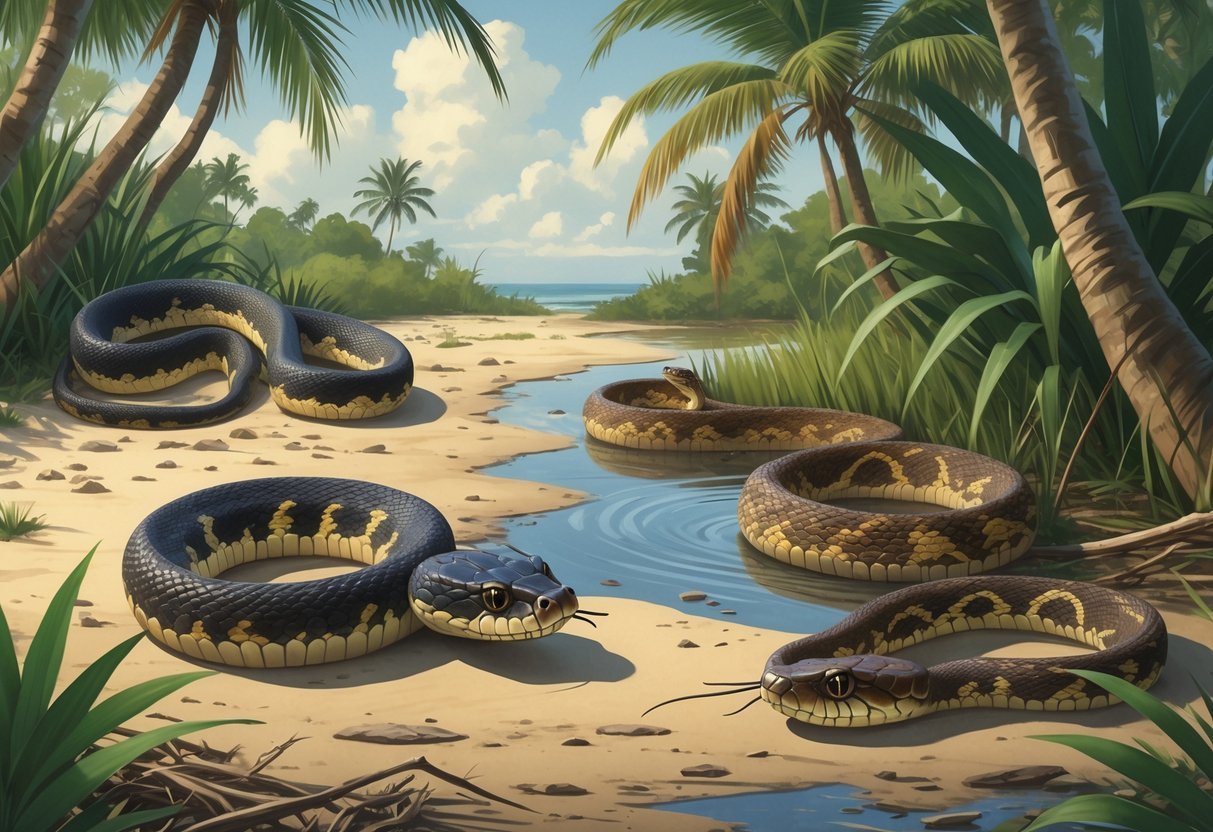
You will encounter three venomous species most commonly in South Florida: a large rattlesnake that favors dry pine and palmetto habitats, a semi-aquatic pit viper found in wetlands, and a small, stout rattlesnake that hides in leaf litter and edges. Each species has distinct markings, habitats, and bite risks you should know.
Eastern Diamondback Rattlesnake
The eastern diamondback rattlesnake (Crotalus adamanteus) is the largest venomous snake in North America and can exceed 6 feet in length. You’ll recognize it by the bold diamond-shaped dorsal pattern with light centers and dark borders, a heavy-bodied profile, and a pronounced rattle on the tail.
This species uses dry, sandy habitats—pine flatwoods, scrub, and coastal dunes. It often basks near trails or road edges.
It feeds mainly on small mammals and ground-nesting birds, using venom to immobilize prey. Bites are serious because of large venom yield and proximity to major vessels in a big body.
If bitten, keep the victim still, call emergency services, and avoid tourniquets, cutting, or suction. Do not try to capture the snake.
Florida Cottonmouth
The Florida cottonmouth (Agkistrodon conanti), commonly called the cottonmouth or water moccasin, is a stout, semi-aquatic pit viper frequenting marshes, swamps, canals, and pond edges. You’ll spot a triangular head, heat-sensing pits, and a dark banded body.
Juveniles often show a bright tail tip they use to lure prey. Cottonmouths are more likely to stand their ground when threatened but many will retreat into water.
Their venom causes local tissue damage and systemic effects; however, dry bites (no venom injected) can occur. If bitten near water, move to safe ground, immobilize the limb, and seek immediate medical care.
Dusky Pygmy Rattlesnake
The dusky pygmy rattlesnake (Sistrurus miliarius barbouri) is small and secretive, usually 14–24 inches long, with a single-file row of dark dorsal blotches and a tiny, raspy rattle you may not hear. You’ll find it in scrub, hammocks, pine flatwoods, and transitional edges—often under leaf litter or low vegetation.
Because of its small size the venom yield is low, but bites can still cause pain and swelling. Children or small pets face higher risk.
Identification tips: keeled scales, a relatively narrow head compared with larger rattlers, and a tail with a series of small rattles. After a bite, keep the patient calm, immobilize the area, and get professional medical attention promptly.
Less Common and Non-Native Venomous Snakes
These species are not the most frequently encountered venomous snakes in South Florida, but they pose real risks. Learn how to recognize them, where you might see them, and what immediate steps to take if you encounter or are bitten.
Eastern Coral Snake
The eastern coral snake (Micrurus fulvius) is small, slender, and brightly banded with red, yellow, and black rings. You’ll most often find it in leaf litter, pine flatwoods, and edges of hammocks; it is secretive and rarely aggressive.
Coral snake venom is primarily a neurotoxin that can cause paralysis by blocking nerve transmission. Bites are uncommon but potentially serious; seek emergency medical care immediately if bitten.
Do not try to suck out venom or use tourniquets. Identify coral snakes by band order—red touching yellow indicates a coral snake in this region.
If you’re unsure, keep a safe distance and photograph from afar for identification by a professional. Wear gloves and boots when working in likely habitat to reduce bite risk.
Potential Encounters with Southern Copperhead
The southern copperhead (Agkistrodon contortrix contortrix) is uncommon in South Florida proper but appears in parts of northern Florida and could be mistaken for local species. You might see a stout, heavy-bodied snake with hourglass-shaped darker bands over a lighter brown background.
Copperheads deliver hemotoxic venom that causes localized tissue damage and pain more than rapid systemic collapse. If you suspect a copperhead bite, immobilize the limb and get to an emergency department promptly.
Antivenom is available when clinically indicated. Avoid cutting or applying ice to the wound.
You can reduce encounter chances by clearing brush, keeping woodpiles elevated, and watching where you step at dusk and dawn. Educate neighbors and workers about distinguishing copperheads from nonvenomous look-alikes like young ratsnakes.
Non-Native Threats: Burmese Python
The Burmese python (Python molurus bivittatus) is a large constrictor, non-venomous, and an invasive predator in South Florida—chiefly in the Everglades and surrounding wetlands. It poses ecological, not direct venomous, risks: it preys on mammals, birds, and reptiles, disrupting native populations.
You’ll most likely spot pythons near waterways, canals, and dense marsh vegetation. They are capable of reaching lengths over 10 feet.
Report sightings to local wildlife authorities rather than attempting capture. Trained teams use traps and visual surveys to manage the population.
Although not venomous, pythons can bite and deliver deep puncture wounds; they kill prey by constriction. Keep children and pets away from dense cover and water edges, and follow Florida Fish and Wildlife guidance on reporting and safety.
Pit Vipers Vs. Elapids: Distinguishing Features
You will learn how pit vipers and elapids differ in body shape, fang structure, and venom action. Heat-sensing pits and behavior affect detection and risk.
Focus on visible traits, the type of toxins likely delivered, and how each group typically hunts or defends itself.
Physical Characteristics and Venom Types
Pit vipers in South Florida (cottonmouths, rattlesnakes) have stout bodies, triangular heads, and vertically elliptical pupils. Their long, hinged fangs fold against the roof of the mouth when not in use.
Venom from pit vipers is typically hemotoxic or cytotoxic—it destroys tissue, disrupts blood clotting, and causes local swelling and pain. Elapids (coral snakes) are slender, have round pupils, and possess short, fixed front fangs that do not fold.
Their heads are more continuous with the neck and look less blocky than vipers. Elapid venom is rich in neurotoxins that interfere with nerve transmission; systemic signs can include muscle weakness and respiratory paralysis rather than pronounced local tissue damage.
When you look for identification clues, note scale texture and color pattern: pit vipers often have keeled, matte scales and thicker bodies. Coral snakes have smooth scales and distinct red-black-yellow banding.
Use multiple features together; a single trait can mislead.
Role of Heat-Sensing Pits
Pit vipers have specialized heat-sensing pits located between each eye and nostril. These pits detect minute temperature differences and create a crude thermal image of warm-blooded prey.
Pits improve nocturnal hunting and let vipers strike accurately in low light. Elapids lack these facial pit organs.
They rely more on vision and chemical cues (tongue-flicked scent particles) to locate prey. In South Florida habitats, this difference shifts activity patterns: pit vipers often ambush warm mammals or birds at dusk and night, while coral snakes hunt smaller ectotherms or concealed prey during day or night without thermal targeting.
If you encounter a snake at night near rodent trails or water edges, a pit viper’s presence is more likely due to its heat-sensing advantage. That fact affects where you should exercise extra caution.
Behavioral Differences
Pit vipers commonly use ambush tactics. They sit near game trails, water margins, or vegetation edges and strike quickly when prey passes within range.
Rattlesnakes add a rattle warning when threatened; cottonmouths may gape, showing a white mouth. These defensive displays give you cues to back away.
Coral snakes are secretive and reclusive. They move through leaf litter, under logs, and in burrows.
When threatened, they rarely bluff; their preferred response is to hide or flee. Coral snakes may bite if handled or provoked, and their neurotoxic venom can be dangerous despite their small size.
You should avoid reaching into dark crevices, tall grass, or woodpiles. Give space to any snake showing a triangular head or defensive display, and do not attempt to capture or handle snakes to test identity.
Nonvenomous Snakes Commonly Mistaken for Venomous Species
You will encounter several harmless snakes that share color, pattern, or habitat with venomous species in South Florida. Knowing specific field marks and typical behavior helps you distinguish them quickly and safely.
Look-Alikes: Scarlet Kingsnake and Scarletsnake
The scarlet kingsnake and the scarletsnake both show red, black, and yellow/white banding that can be confused with coral snakes. Note the band order: on the scarlet kingsnake the red bands touch black bands, while on a true coral snake red touches yellow.
The scarlet kingsnake often has distinct black-edged red blotches and a more glossy, slender body than coral snakes. Scarletsnakes are usually more uniform in width and have smaller heads that are not distinct from the neck.
If you see a small, smooth-scaled snake under leaf litter or in loose soil, treat it as nonvenomous but keep distance while observing banding. Do not rely on fencing or handling to confirm identity; photograph from a safe distance and consult local guides or experts.
Water Snakes and Other Similar Species
Several water-associated and fast-moving snakes are commonly misidentified as cottonmouths or other pit vipers.
Banded watersnakes and brown watersnakes frequent canals, ponds, and retention basins. Adults often darken and lose banding, appearing solid brown or black.
Florida green watersnakes can be olive to bright green and are nonvenomous but bulky, which can alarm people.
These species flatten their heads and strike defensively, which mimics a cottonmouth’s posture.
Other look‑alikes include the black racer and coachwhip—long, slender snakes that move quickly across open ground.
The small ring‑necked snake has a thin orange neck band that might draw attention but poses no venom threat.
When you see a waterside snake, prioritize distance. Observe pupil shape and facial bands only if you can do so safely.
Otherwise, step back and let the snake move away.
Safety, First Aid, and Conservation
Venomous snakes in South Florida live near water, edges of woodlands, and in suburban green spaces.
What To Do If You Encounter a Venomous Snake
Stop and back away slowly.
Most bites occur when people try to handle, kill, or get too close to a snake.
Maintain at least several yards of distance. Do not run toward children or pets—move them away calmly.
Do not try to pick up, prod, or move the snake.
Rattlesnakes, cottonmouths, and coral snakes may stay coiled or hidden; treat any unfamiliar snake as potentially venomous.
If the snake is on a trail or in a yard, leave it alone and give wildlife officials a photo and location for identification if removal is necessary.
If you must pass near the snake, detour widely and loudly announce your approach so the snake can retreat.
Wear boots and long pants when hiking in brush or along canals to reduce the chance of a bite.
Record the sighting (time, GPS, photos) and report dangerous presence near homes, schools, or public trails to local wildlife authorities.
First Aid for Snakebites
Call 911 immediately; tell dispatch you suspect a venomous snakebite and your exact location.
Keep the victim calm and still—movement spreads venom faster.
Lay the person down and immobilize the bitten limb at roughly heart level.
Remove rings, watches, and tight clothing before swelling begins.
Do not cut, suck, apply ice, or use a tourniquet.
Do not attempt to capture the snake; if safe, take a clear photo for identification by medical staff or the poison center.
If transport is delayed, monitor breathing, pulse, and conscious state.
If trained personnel and tools are available, pressure-immobilization may be appropriate for neurotoxic bites (e.g., coral snake), but follow emergency dispatcher or poison center guidance.
Conservation and Importance of Snakes
You benefit from snakes because they control rodent populations and help balance ecosystems in Florida. Venomous species like rattlesnakes and cottonmouths play roles similar to nonvenomous predators.
Avoid killing snakes on sight. Many nonvenomous species mimic venomous patterns, and indiscriminate removal harms native populations.
The Eastern Indigo Snake, a nonvenomous native and federally protected species, relies on healthy gopher tortoise burrows and intact habitat. Protecting habitat helps indigo snakes and venomous species coexist with people.
Support local conservation by creating wildlife-friendly yards. Keep brush cleared near structures, secure compost and pet food, and preserve native vegetation corridors.
Report injured, sick, or illegally kept venomous snakes to Florida Fish and Wildlife or local animal control. Do not relocate them yourself.

