
In South Florida, cane toads are highly adaptable and thrive in disturbed habitats. They tolerate a range of temperatures and moisture levels, breed in standing water or moist soil, and eat almost anything they can swallow.
Native frogs have specific habitat requirements that vary by species.Some prefer permanent ponds with aquatic vegetation; others use ephemeral pools or tree holes for breeding.
Most native frogs need access to terrestrial areas for shelter and foraging. They also require intact wetland systems to support their life cycles.
Breeding Habits of Cane toads vs native Frogs
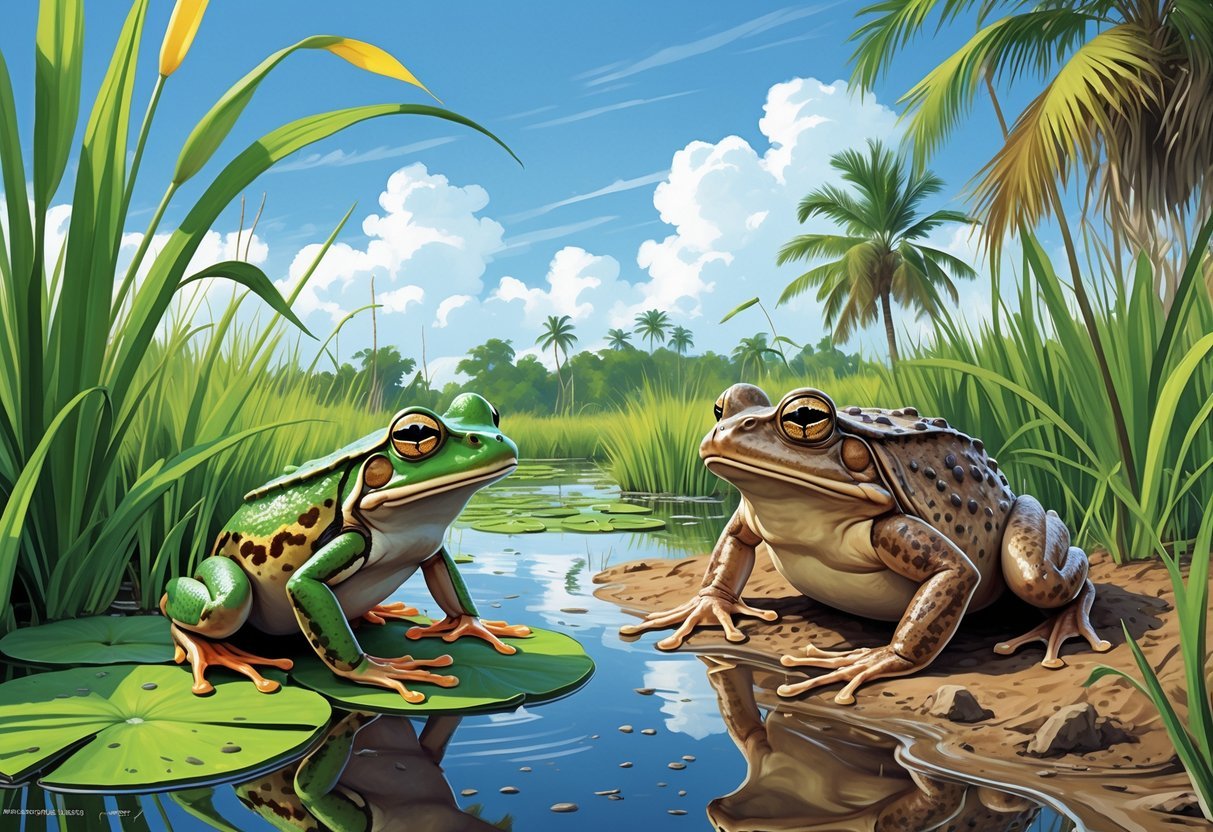
Cane toads breed year-round in standing water, while most native frogs have more specific breeding seasons tied to rainfall patterns. You’ll find differences between the two groups when it comes to egg masses, tadpoles, and development rates.
Cane Toad Breeding Behavior
Cane toads mate at night near standing water sources such as ponds or canals. Males call from the edges of shallow waters; females lay long strings of eggs that hatch into small black tadpoles within days.
Tadpoles transform into tiny replicas of adults within weeks but may take longer depending on temperature conditions (colder weather slows development).
Breeding Patterns Among Native Frogs
cane Toads vs Native Frogs: How to Tell Them Apart
In South Florida yards and ponds, you may come across large warty creatures that resemble toads and smaller, smoother ones that look like frogs. It is indeed notable to be able to distinguish between the two as cane toads, being non-native and much larger in size, carry a potent toxin that can harm pets and wildlife.
To accurately identify whether an animal on your property is a cane toad or a native frog,there are certain key features you should look for. These include size (cane toads can reach up to 6-9 inches), triangular shoulder glands behind the eyes, and the absence of cranial ridges. These characteristics are indicative of a cane toad.To help you protect your pets and avoid any potential risks associated with handling these animals, this article will provide clear identification traits for both species. It will also compare native and invasive species, discuss their habitats and breeding habits, and also offer practical steps for reducing harm caused by these creatures.
Physical Differences Between Cane Toads and Native Frogs
One of the easiest ways to tell cane toads apart from native South Florida frogs is by looking at their body shape,skin texture,poison glands size and shape. When assessing an animal’s identity pay close attention its head structure as well as its parotoid gland shape.
Cane Toad Identification Markers: Size, Colour & Glands
Size is often a rapid giveaway when it comes distinguishing between these two species. Adult cane toads typically measure 10-15 cm in length while most native frogs are usually under 8 cm.
Color ranges may overlap so it’s important not rely solely on color when trying identify an animal’s species. Instead check its skin texture; cane toads have dense coarse warts while most native frogs have smoother moist skin.
Another key feature is the parotoid glands which produce bufotoxin -a potent toxin that can irritate human skin or cause serious harm or death if ingested by pets or other animals. Cane toads have large triangular glands that bulge conspicuously behind the tympanum, while native species have smaller oval glands.
Head Features and Poison Glands
In addition to the above mentioned characteristics, examining an animal’s head closely can also help you identify whether it is a cane toad or a native frog. as a notable example, Southern toads display pronounced cranial crests or bony ridges above their eyes while cane toads typically lack these ridges or have them much reduced.
Cane Toads vs Native Frogs: geographic Range and Habitats
While both species can be found in South Florida,they tend to occupy different habitats due to differences in size,behavior and toxin production. Cane toads are commonly found in urban, suburban and wetland areas were they exploit ponds, ditches and yard water sources for breeding.
Conversely,native frogs occupy a wider range of freshwater and upland niches across South Florida including yards,hammocks and wetlands. They are important insect predators that play a crucial role in local food webs.
breeding Habits of Cane Toads vs Native Frogs
cane Toad Breeding Behavior
Unlike most native frogs which have specific breeding seasons tied to rainfall patterns, cane toads breed year-round in standing water. Males call from the edges of shallow waters at night while females lay long strings of eggs which hatch into small black tadpoles within days.
Tadpoles transform into tiny replicas of adults within weeks but may take longer depending on temperature conditions (colder weather slows development).
Breeding Patterns Among Native Frogs
Native frogs also breed near standing water sources but their breeding season is more specific compared with cane toads’. they rely on seasonal pools as well as intact wetland systems for successful reproduction. Their tadpoles may take longer then those of cane toads before transforming into adults due variations in temperature.
being able to accurately identify cane toads and native frogs is crucial for protecting your pets and understanding the impact of invasive species on local ecosystems. By paying attention to key features such as size, skin texture, poison glands and breeding habits, you can easily tell these two species apart. Remember to take necessary precautions when dealing with cane toads as their toxin can be harmful.
Introduction
Cane toads are a highly adaptable and invasive species that have become a major problem in many parts of the world. Originally introduced to control pests in sugarcane fields, they have since spread to various habitats and outcompeted native species. In this article, we will discuss the habitat preferences, life cycle and breeding behavior, toxicity and risks, ecological impact, and also mitigation and control strategies for cane toads.
Habitat Preferences
Cane toads are commonly found in low-lying areas with access to water sources such as ponds or ditches. They also prefer areas with plenty of ground cover such as shrubs or compost piles. Their large size and potent parotoid glands allow them to thrive in habitats where predators may avoid them.Though, native frogs in Florida show a wider range of microhabitat use.
Treefrogs tend to climb vegetation and breed in ephemeral pools while true frogs and spring-breeding species favor permanent ponds or marsh edges. It is important to note that native species are generally less tolerant of urban disturbance compared to cane toads.
Habitat fragmentation and loss can greatly reduce local frog diversity but may not have the same effect on cane toad populations.
Life Cycle and Breeding Behavior
The life cycle of cane toads differs from that of native frogs in several ways including egg form, breeding timing, and larval development. Cane Toad eggs are deposited in long gelatinous ribbons containing thousands of eggs which can be found in still or slow-moving freshwater bodies like ponds or ditches.
Eggs typically hatch within a few days depending on temperature conditions.The tadpoles then form dense swarms which can outcompete native larvae for food resources. Cane toad tadpoles grow rapidly and can metamorphose into large juvenile toads in just a few weeks. it is important to note that even juvenile cane toads can produce potent toxins,making them a danger to pets and predators.
When trying to distinguish between cane toad eggs and those of native frogs, it is best to look for longer egg ribbons as well as the presence of adult cane toads in the area.
Breeding Habits of Florida Frogs and Toads
Native frog species in florida vary in their breeding habits.Southern Toads, for example, lay long ribbons similar to those of cane toads but tend be smaller in size (under 4 inches). They also tend breed in ephemeral pools after heavy rains. Green treefrogs conversely lay loose clumps or floating foam masses near still water bodies while oak trees prefer temporary rain pools with shorter egg ribbons compared to cane toads.
The timing of breeding also differs among native species with many tied closely seasonal rains and cooler nights. Cane Toads though are able breed across a broader range of warm conditions. by looking at call type,egg arrangement,and adult morphology together you can confirm which species is present.
Toxicity and Risks
Cane Toads produce a potent skin secretion that can cause immediate oral or ocular irritation as well as cardiac disturbance or neurologic signs if ingested by animals or humans. It is important for people who come into contact with these animals know how recognize exposure quickly so they can take appropriate action.
Bufotoxin
Cane toad skin contains bufotoxin which contains cardiac-active steroids that affect heart rhythm, blood pressure, and the nervous system when absorbed through the mouth, eyes, open wounds or ingestion. Wildlife that bites or attempts to eat a cane toad can die quickly from cardiac arrest or seizures. Dogs and cats are especially at risk because they often mouth unfamiliar animals.
humans exposed to the secretion may experience skin or eye irritation but systemic effects are rare unless large amounts are swallowed.
Symptoms of Poisoning in Pets
If your pet comes into contact with a cane toad you may see profuse drooling, pawing at the mouth, and excessive salivation within minutes. Neurologic signs such as disorientation, stumbling, circling, tremors, seizures and collapse can follow in severe cases. gastrointestinal upset (vomiting) is also common followed by heart abnormalities like arrhythmias or rapid pulse.
The severity of symptoms depends on the amount of toxin ingested as well as the size of your pet.
Handling Safety and Personal Protection
If you need to handle a cane toad it is indeed critically important that you wear nitrile gloves and avoid touching your eyes or face. If contact does occur wash skin with soap and water promptly while irrigating eyes for at least 15 minutes. If your pet has come into contact with a cane toad it is indeed critically important that you flush their mouth out immediately while keeping their head angled downward so any toxins run away from their throat.
If exposure occurs it is indeed critically important that you transport an affected pet promptly for emergency veterinary care where staff should be informed about possible bufotoxin exposure so they can monitor cardiac and neurologic status while providing supportive care if necessary.
Ecological Impact
Cane Toads have been known to alter local food webs due their wide range of prey items which include both invertebrates and small vertebrates like frogs lizards, and even nestling birds or rodents. Their large size and potent toxins also give them an advantage over native species in terms of competition for resources.
Diet and Predatory Behavior
Cane Toads are opportunistic omnivores that consume a wide range of prey items including beetles, roaches, centipedes, spiders, millipedes as well as small frogs and lizards. They are also known to concentrate around artificial lights which can increase their encounters with pet food or garbage.
Their feeding patterns can also have an impact on native species by altering aquatic habitat conditions as well as outcompeting smaller native adults for daytime refugia and insect prey.
Competition with Native Species
Cane Toads compete directly and indirectly with native frogs for shelter, breeding sites, and food resources. This can be seen in areas where both cane toads and green treefrogs breed in the same backyard ponds or ditch edges. The presence of cane toad egg strings or high tadpole densities can also alter aquatic habitat conditions making it challenging for native species to thrive.
Their potent toxins also pose a threat to predators that normally control amphibian populations which can shift predator communities.In some cases this may benefit other invasive species which is why it is important not to introduce exotic pets into the surroundings but rather use exotic pet amnesty programs instead.
Mitigation, Control, and Reporting Strategies
If you come across a cane toad it is important that you know how properly identify them before attempting removal or euthanasia. It is best not handle these animals unless absolutely necessary due their ability secrete bufotoxins when threatened.
Proper Identification Before Removal
To properly identify a cane toad look for their large size (adults often 10-15 cm), dry warty skin, prominent parotoid glands behind the eyes, and a broad head with no cranial ridges. Native frogs in South Florida tend to be smaller, smoother-skinned, and have visible tympanums or ridges. If you are unsure do not handle the animal but rather use nitrile gloves and a long-handled net or container if you must move it.
Humane Removal and Euthanasia
If you need to remove or euthanize a cane toad it is important that you do so humanely. This can be done by placing them in a plastic bag and freezing them for at least 48 hours before disposing of them in the trash.
If you are unable to safely remove or euthanize the animal yourself it is best to contact professional trappers or use pet amnesty programs instead.
Reporting
If you come across a cane toad on your property it is indeed critically important that you report its presence quickly. This will help authorities track their spread and develop effective management strategies for controlling their populations.
If you need to remove invasive species, make sure it is allowed and use methods that minimize stress and exposure to toxins. wear nitrile gloves and use a container or long-handled net to capture the species. Keep pets and children away during the removal process.
Before relocating live species, check local regulations as some areas prohibit translocation of invasive species. If euthanasia is necessary, follow guidelines from state wildlife agencies or veterinarians.
For humane methods of removal, contact a licensed wildlife rehabilitator, veterinarian, or your local fish and wildlife agency. Avoid using crude techniques that can spread toxins or cause prolonged suffering.
Properly dispose of carcasses in sealed bags according to municipal waste rules to prevent secondary poisoning of scavengers.
Hiring Wildlife Trappers and Utilizing Pet Amnesty Programs
If you have recurring infestations, large numbers of tadpoles, or are unsure about legal handling procedures, consider hiring a licensed wildlife trapper. These professionals use approved traps,baiting strategies,and disposal protocols that minimize risk to native species.
When working with a trapper, ask about their permits and methods used for trapping as well as if they test equipment between sites. If the invasive species originated from the pet trade or you come across a non-native amphibian that may have been released by someone else,consider utilizing exotic pet amnesty programs.
These programs allow for surrendered animals without penalty while also preventing illegal releases into the wild. To help track the spread of invasive species and trigger coordinated control measures in your area report sightings to state agencies or citizen science platforms with photos, GPS location data,and habitat notes included in your report.
Frogs And Toads Found In South Florida
The South Florida region is home to a diverse mix of native and non-native frog and toad species. These species vary in size, call, habitat, and potential threat to pets or native wildlife. Expect to encounter tree-dwelling invaders, large aquatic frogs near canals, and smaller marsh specialists in wetland pockets.
Common Tree Frogs And Toads
The cuban treefrog is commonly found in urban and suburban areas; it often perches on house walls at night and competes with native tree frogs for resources. The barking treefrog and bird-voiced treefrog use loud calls during spring and summer breeding seasons.
The barking treefrog prefers pine flatwoods while the bird-voiced variety favors wetlands and pond edges.Smaller species include the little grass frog, which is the smallest frog species in Florida. This tiny amphibian lives in grassy areas or marsh vegetation making it easy to overlook.
The spring peeper, another small species found in seasonal wetlands, makes a high-pitched peep during early spring months. Many tree frogs are nocturnal creatures that climb smooth surfaces making them difficult to spot during the day; listen for their distinct calls instead.
Different Species And Unique Characteristics
Larger aquatic species you may come across include the American bullfrog, pig frog,and< em>riv


This article is really informative and important for anyone living in South Florida to read.