
Florida is home to a diverse array of reptiles, ranging from small anoles found on patios to large alligators lurking in nearby marshes. In this article, we will explore the different types of reptiles you may encounter in Florida, how to identify them, and why they are significant for the state’s ecosystems.
Discovering Florida’s Reptiles
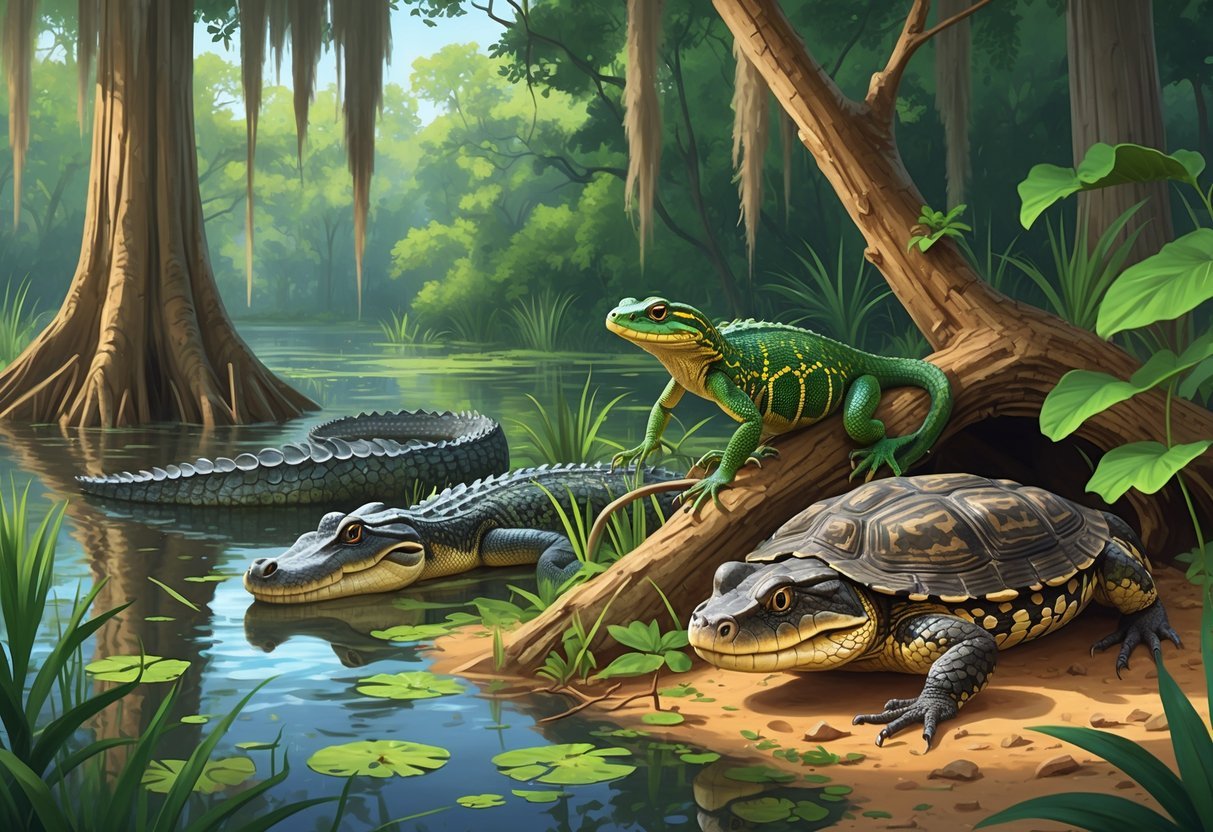
As you explore Florida’s urban areas and natural landscapes, it is important to be both curious and cautious. The state is home to native species as well as introduced invaders that can have significant impacts on habitats and human safety.
In this article, we will provide tips for identifying common reptile species in Florida and understanding their roles within the ecosystem. We will also discuss conservation efforts and how human choices can affect reptile populations.
Key Takeaways
- Florida has a diverse range of native and non-native reptile species.
- Some reptiles are large predators while others play important roles in controlling pests.
- Conservation efforts are crucial for maintaining healthy populations of these animals.
An Overview of Reptiles in Florida
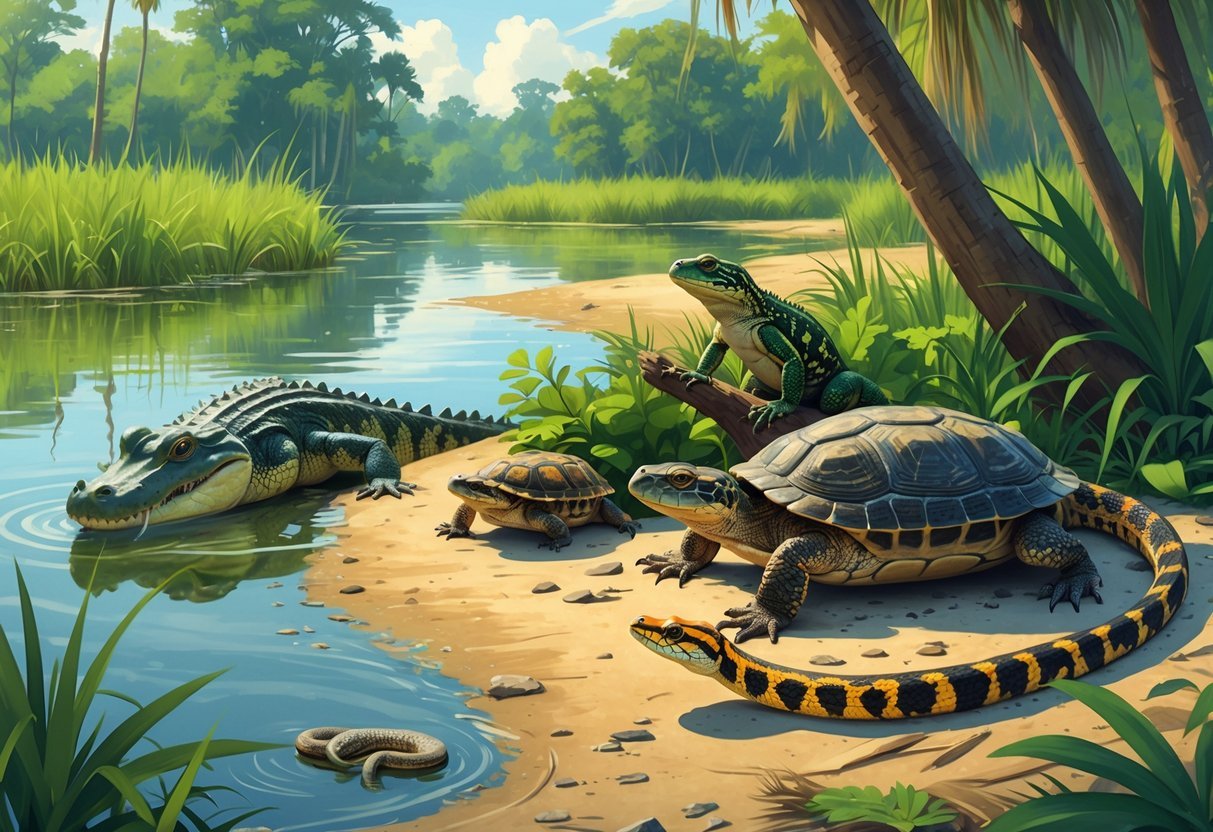
Florida is home to a wide variety of reptiles that can be found in wetlands, pine forests, beaches, and even urban areas. These include native species such as the american alligator and various turtles as well as introduced lizards and snakes that have become established in recent years.
Diversity and distribution
There are over 80 native reptile species in Florida along with many non-native species that have been introduced to the state. Crocodilians like the American alligator and American crocodile can be found in freshwater marshes and coastal mangroves while turtles can be found in ponds, rivers, and coastal areas. Lizards range from small anoles commonly seen in yards to larger invasive tegus found in rural or suburban areas. Snakes also vary greatly from water snakes to venomous species like eastern diamondback rattlesnakes.
The Atlas of Amphibians and Reptiles in Florida documents hundreds of thousands of verified records for these animals. You can use this resource or local field guides to determine which reptile species occur near your county. Distribution often follows habitat types with different species being found along coastal dunes versus interior flatwoods or the Everglades.
Native vs Introduced Species
Along with long-established native reptiles, there are also many non-native introductions present throughout Florida. Some examples of native species include the American alligator, gopher tortoise,and various box turtles which have evolved alongside Florida’s climate and landscapes.
Introduced species have arrived through pet releases or accidental transport. Examples include Burmese pythons which are now widespread throughout South Florida as well as Argentine tegus which have been reported across multiple counties. These species can have negative impacts on native wildlife by preying on them, competing for habitat, or spreading disease. Management efforts such as trapping and removal programs aim to reduce their impact. The atlas and state agencies track established non-native records so you can see where these invasive species are confirmed.
The Role of Reptiles in Florida Ecosystems
reptiles play important roles in maintaining healthy ecosystems throughout Florida. Such as, predators like snakes and crocodilians help control rodent and fish populations while turtles aid in seed dispersal and nutrient recycling in wetlands.Gopher tortoises also play a crucial role as a keystone species by digging burrows that provide shelter for many other animals.
It is important for humans to take actions that support the conservation of these animals such as protecting nesting beaches, reporting illegal trade, and avoiding releasing pets into the wild.
Crocodilians: Florida’s Largest Reptiles
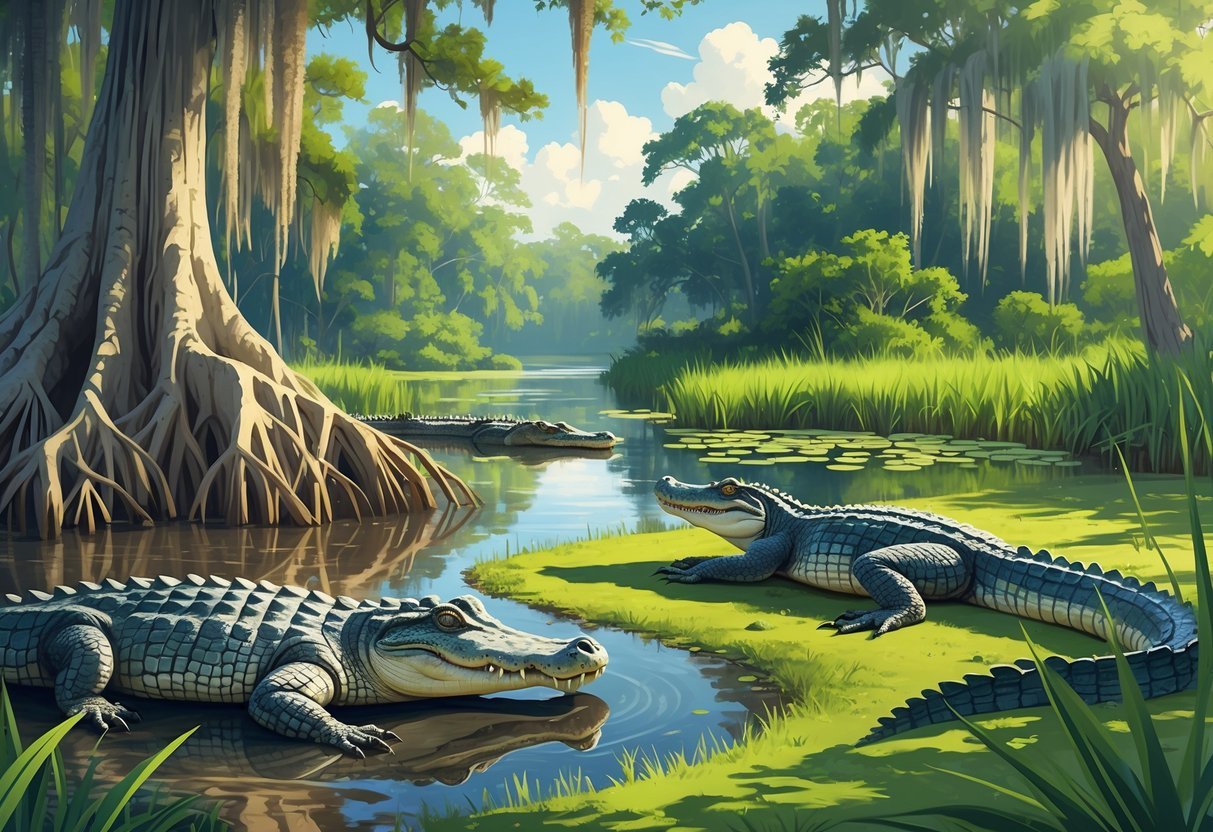
Florida is home to three main types of crocodilians: the American alligator,American crocodile,and spectacled caiman. Each of these species has distinct characteristics that affect how they should be observed or avoided.
American Alligator
the American alligator (Alligator mississippiensis) can be found throughout most of Florida’s freshwater marshes,lakes,rivers,and canals. It is indeed easily identified by its broad rounded snout and dark almost black skin. Adults typically range from 8-13 feet long with some males growing even larger.
While alligators are generally shy around humans, they are opportunistic feeders and should never be fed. Feeding them can cause them to lose their fear of humans and increase the risk of negative interactions. Nesting occurs in the spring with females guarding their nests and hatchlings for a brief period.
If you encounter an alligator on land, it is important to keep a safe distance (at least 30 feet). It is also recommended to avoid being near the water’s edge at dawn or dusk when alligators are more active.
American Crocodile
The American crocodile (Crocodylus acutus) can mainly be found in South Florida, particularly in mangrove estuaries and coastal lagoons. It has a narrower V-shaped snout and lighter gray-green skin compared to the alligator. unlike an alligator, its fourth lower tooth is visible even when its mouth is closed.
crocodiles prefer brackish or saltwater habitats and can often be seen basking on exposed banks. They primarily feed on fish,turtles,birds,and small mammals. Due to habitat loss and illegal hunting, crocodiles are listed as threatened species.You are more likely to encounter crocodiles in southern tip areas such as Everglades coastal zones. If you do come across one, it is indeed critically important to keep your distance and avoid approaching nesting sites during spring when females may become defensive.
Spectacled Caiman
The spectacled caiman (Caiman crocodilus) is not native but has been reported in parts of Florida due to escapes or releases from captivity. It looks similar to young crocodiles but has a shorter rounded snout with lighter patterns on its skin. Most caimans stay under 5 feet long,making them smaller than Florida’s native species.
caimans prefer freshwater habitats such as canals, ponds, and marshes. They primarily feed on fish,amphibians,and small mammals. As a non-native species, they can compete with native species and may also spread parasites or diseases. It is important to treat caimans like other crocodilians by giving them space and avoiding feeding them.If you come across a caiman in a populated area, it is recommended to report it to local wildlife authorities so they can assess the risk and remove it if necessary.
turtles and Tortoises of Florida
Florida is home to many turtle species that can be found in rivers,swamps,dunes,and dry scrub habitats.These include common freshwater turtles and also rare sea turtles that nest on beaches. Land tortoises are also present in Florida and play an critically important role by digging burrows for other wildlife.
Freshwater Turtles
Pond sliders,painted turtles,and river cooters are commonly seen basking on logs in ponds or canals while snapping turtles prefer hiding in mud and ambushing prey. Softshell turtles like Apalone ferox favor sandy bottoms while map,mud,and musk turtles live in quieter waters.
Many freshwater turtle species are common in suburban wetlands,but some have restricted ranges making them local endemics. it is indeed critically important to watch for protected species and avoid moving wild turtles between waterbodies.
Sea Turtles
Five sea turtle species nest on Florida’s beaches including loggerhead,green,hawksbill,Kemp’s ridley,and leatherback turtles. Loggerheads lay the most nests while green sea turtle numbers have been increasing over recent years.leatherbacks
Reptiles of Florida: A Diverse and Fragile Ecosystem
Florida is home to a diverse array of reptile species, each playing a unique role in the state’s fragile ecosystem. From sea turtles nesting on sandy beaches to gopher tortoises digging deep burrows in dry uplands, these reptiles are an integral part of Florida’s natural heritage.
However,many of these species face numerous threats that put their populations at risk. Habitat loss due to development, road mortality, and illegal collection are just some of the challenges that these reptiles must overcome. In addition, invasive species such as tegus and iguanas pose a significant threat by preying on eggs and competing with native species.
One way to help protect Florida’s reptiles is by supporting efforts to preserve their habitats. This includes protecting nesting beaches for sea turtles and preserving burrow networks for gopher tortoises. additionally, conservationists work tirelessly to restore wetlands and maintain hydrology for marsh-dwelling snakes and alligators.
If you encounter a nesting turtle or hatchlings on the beach, it is indeed critically important to keep your distance and call local wildlife authorities for assistance. Disturbing nests or removing eggs is illegal and can have serious consequences for these endangered species.
Along with native reptile species like green anoles and eastern fence lizards, Florida also hosts numerous non-native lizards that have become established in the state. While some may seem harmless, they can disrupt local food webs and displace smaller native lizards.
It is crucial to learn how to identify venomous snakes in Florida as there are six different species that can be found throughout the state. If you encounter one of these snakes while out exploring nature, it is important to keep your distance and seek medical help if bitten.
it is essential that we continue efforts towards conserving Florida’s diverse array of reptile species. By supporting protected lands, following beach rules, and reporting sightings of rare or protected species, we can help ensure that these creatures continue to thrive in their natural habitats for generations to come.
Frequently Asked Questions
What reptile species can be found in Florida?
Florida is home to a diverse range of native reptiles, including American alligators, various turtles such as the gopher tortoise and loggerhead, lizards like the green anole and Florida scrub lizard, and snakes like the Eastern indigo and corn snake.
Some of these species are only found in specific habitats, such as the rare Florida scrub lizard and gopher tortoise in scrub habitat or sea turtles on coastal beaches during nesting season.
How does Florida’s climate and habitat affect reptile populations?
The warm and humid climate of Florida allows for year-round activity for many reptiles. This longer warm season also provides more opportunities for breeding and feeding.
However, habitat loss and fragmentation due to urbanization have reduced suitable environments for some specialized species.
Which nonnative reptile species pose a threat to Florida’s ecosystem?
There are several invasive reptile species that have negative impacts on Florida’s ecosystems. These include Burmese pythons, Argentine tegus, and green iguanas.
These invaders can harm native wildlife through predation or competition for resources. They can also spread diseases or alter habitats. The state has programs in place to track these species and remove them in order to protect native wildlife.
How can residents safely coexist with reptiles in Florida?
It is indeed critically important to give wild reptiles their space by observing them from a distance. Do not attempt to feed, touch, or catch them.
To reduce attractants for possibly risky or invasive animals like snakes or alligators, secure trash cans, pet food containers, and yard debris. If you encounter one of these animals on your property or while out exploring nature areas, contact local wildlife authorities or the Florida Fish & Wildlife Conservation Commission for assistance.
What conservation efforts are in place to protect Florida’s reptile biodiversity?
There are various targeted conservation programs in place for specific species. These include sea turtle nesting protection, gopher tortoise habitat conservation, and the removal of invasive species like Burmese pythons.
Researchers also use monitoring, habitat restoration, and public outreach to protect reptile populations. Volunteer beach patrols, permit-backed conservation projects, and state-funded programs all play critically important roles in preserving Florida’s reptile biodiversity.
Are there any laws regulating the handling and ownership of reptiles in Florida?
Yes.In order to prevent potential harm or negative impacts on native wildlife and ecosystems, Florida has regulations in place regarding the possession of certain high-risk nonnative species.
The Florida Fish & Wildlife Conservation commission maintains a Prohibited Species List and requires permits for research, exhibition, or eradication activities involving these species.
owners of prohibited species must obtain permits by specific deadlines and mark their animals accordingly. The commercial sale and breeding of some species also face strict limitations.
For current permit rules and compliance steps regarding nonnative reptiles in Florida, please contact the Florida Fish & Wildlife Conservation Commission.


I can’t wait to learn more about the incredible reptiles of Florida and the efforts being made to protect them!